
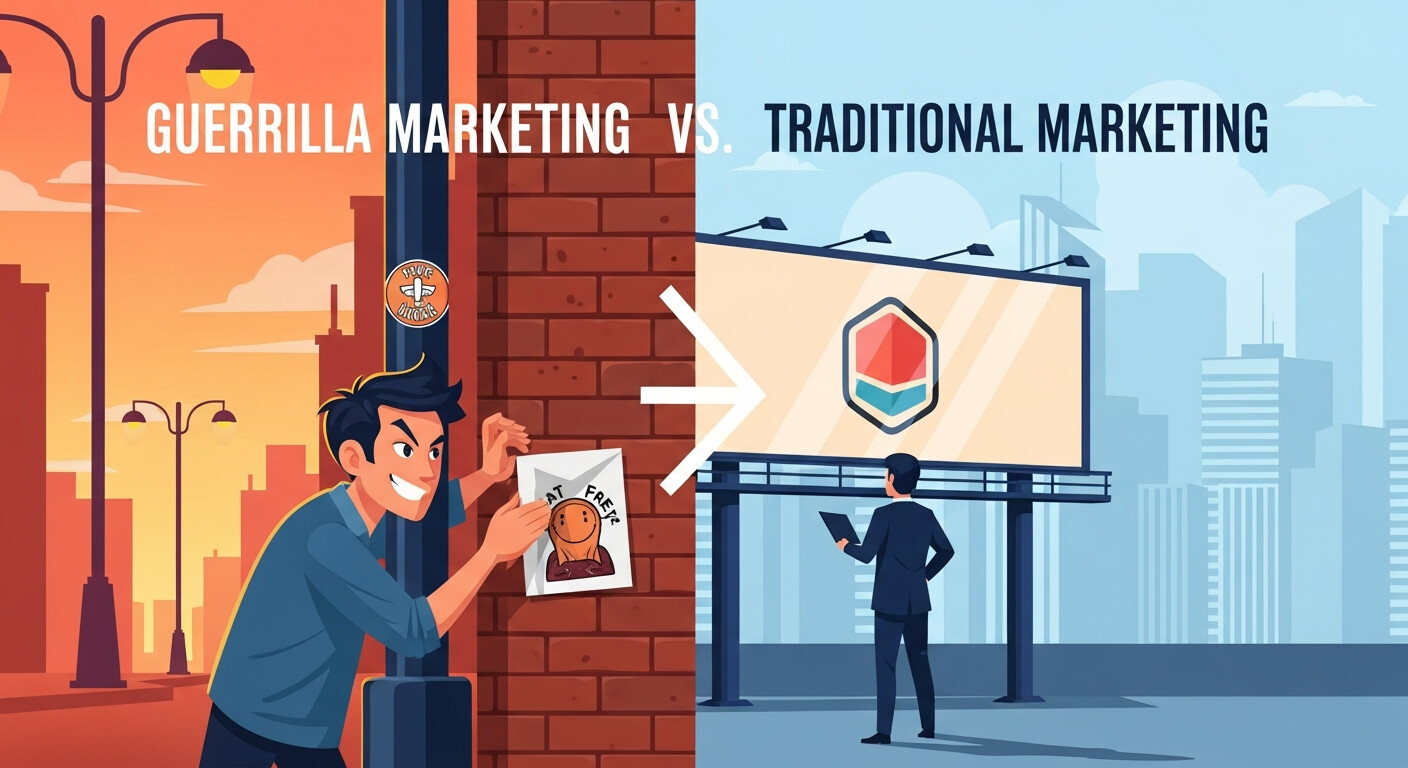
Guerrilla vs Traditional Marketing is about balancing creativity, cost, and consistency. Businesses that combine data, interaction, and scalability can leverage both strategies to maximize impact, engagement, and long-term growth.
In today’s competitive business landscape, choosing the right marketing strategy can determine long-term success. Guerrilla vs Traditional Marketing is a debate that continues to shape how brands attract attention, build trust, and drive conversions. While traditional methods rely on familiarity and scale, guerrilla tactics focus on creativity and surprise. Understanding Guerrilla vs Traditional Marketing helps businesses select an approach aligned with their goals, budget, and audience behavior.
Understanding Guerrilla vs Traditional Marketing
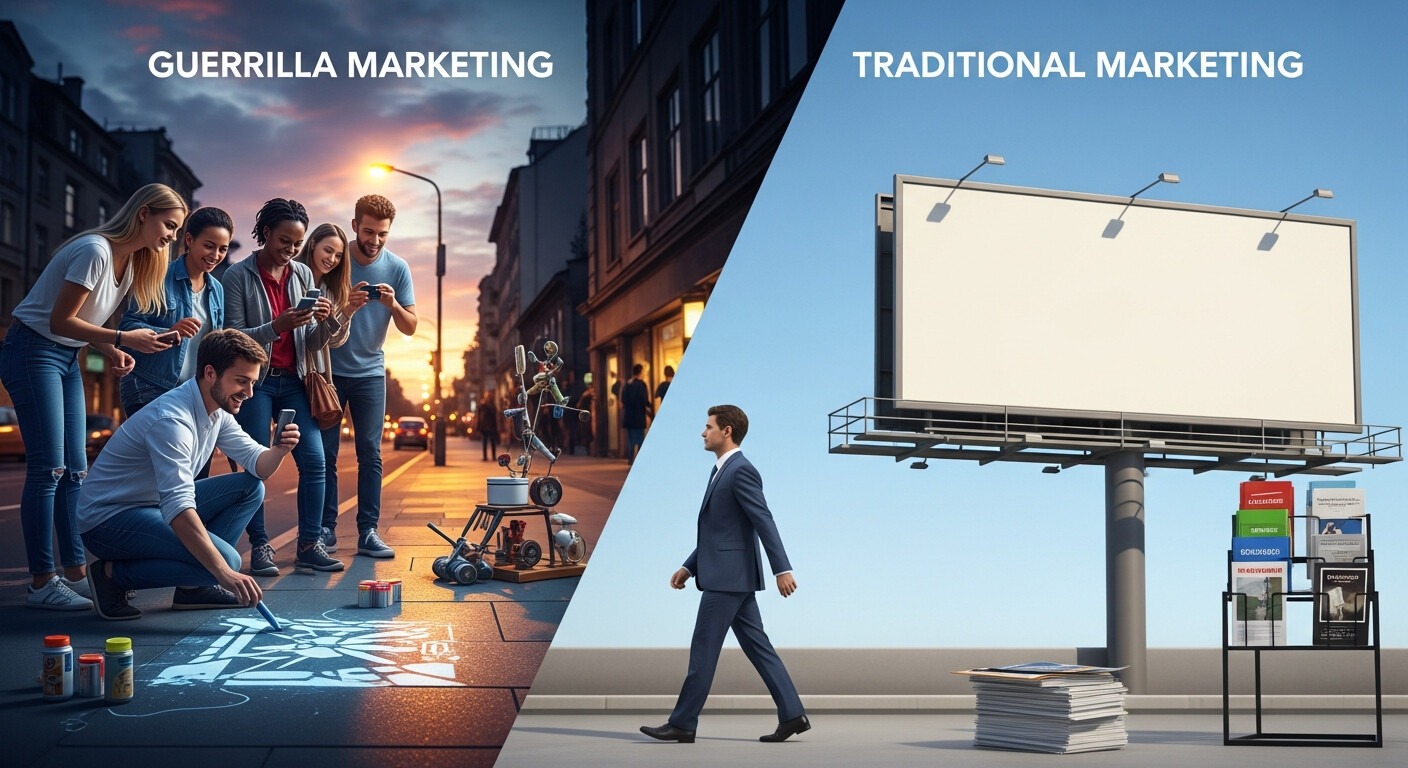
Understanding different promotional philosophies helps businesses choose effective communication strategies. Established advertising relies on familiar channels such as television, radio, newspapers, billboards, and print media. These approaches focus on repetition, broad exposure, and long-term visibility to build trust over time. More creative methods emphasize originality, low-cost execution, and unexpected ideas designed to capture attention and spark conversation. While both approaches share the goal of increasing awareness and driving sales, they differ mainly in how messages are delivered. Creative campaigns depend heavily on emotional appeal and memorability, while traditional efforts prioritize consistency. Many businesses now blend both styles to expand reach while maintaining innovative expression.
Cost Comparison in Guerrilla vs Traditional Marketing
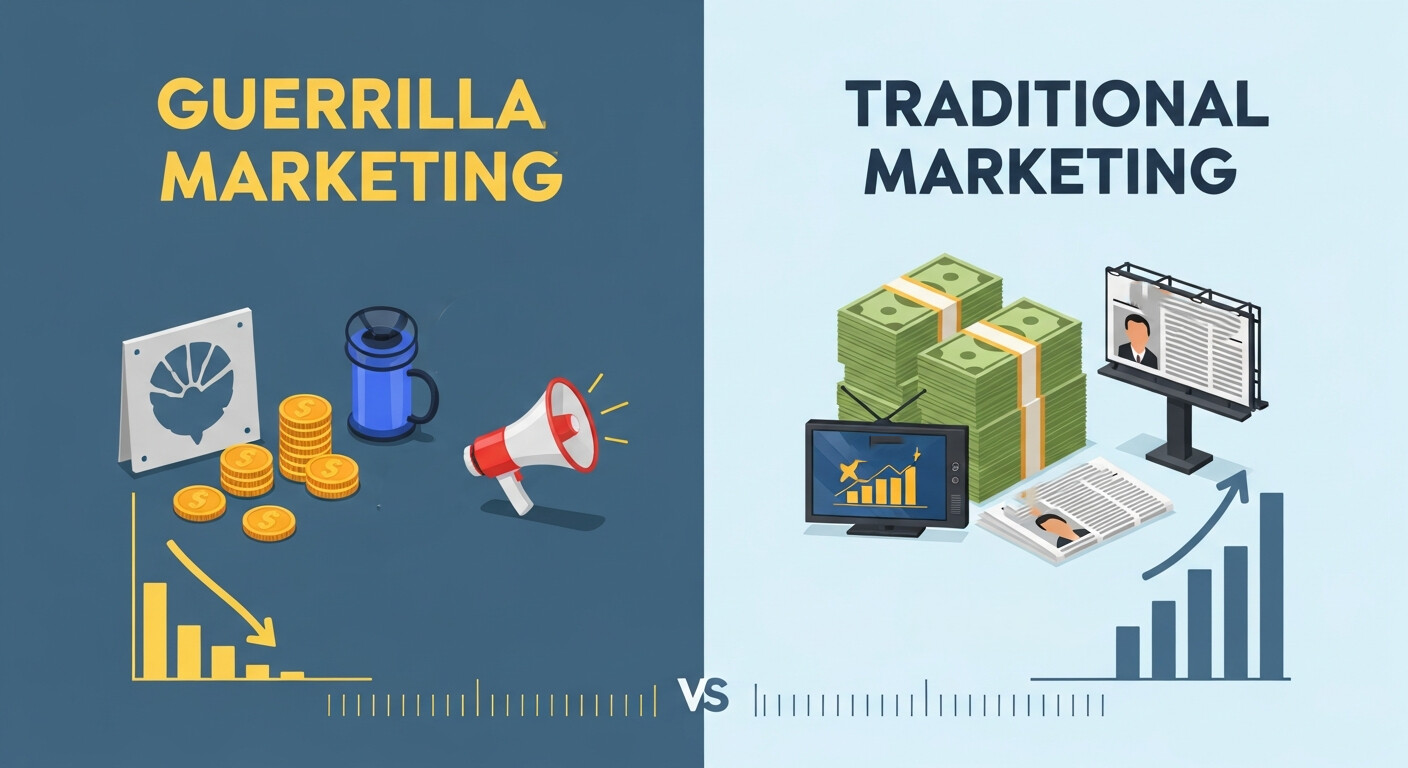
Cost is one of the most important factors when selecting promotional strategies. Established advertising channels often demand substantial budgets for production, placement, and distribution, which can be challenging for smaller businesses. Television spots, print placements, and outdoor displays usually involve high upfront investment. More creative approaches, however, focus on originality rather than spending. Well-planned street activations, viral concepts, or social experiments can generate widespread attention with minimal financial input. This cost-efficient nature makes creative tactics especially appealing to startups and growing brands that need strong visibility without heavy marketing expenses or long-term financial commitments.
Audience Reach and Engagement Levels
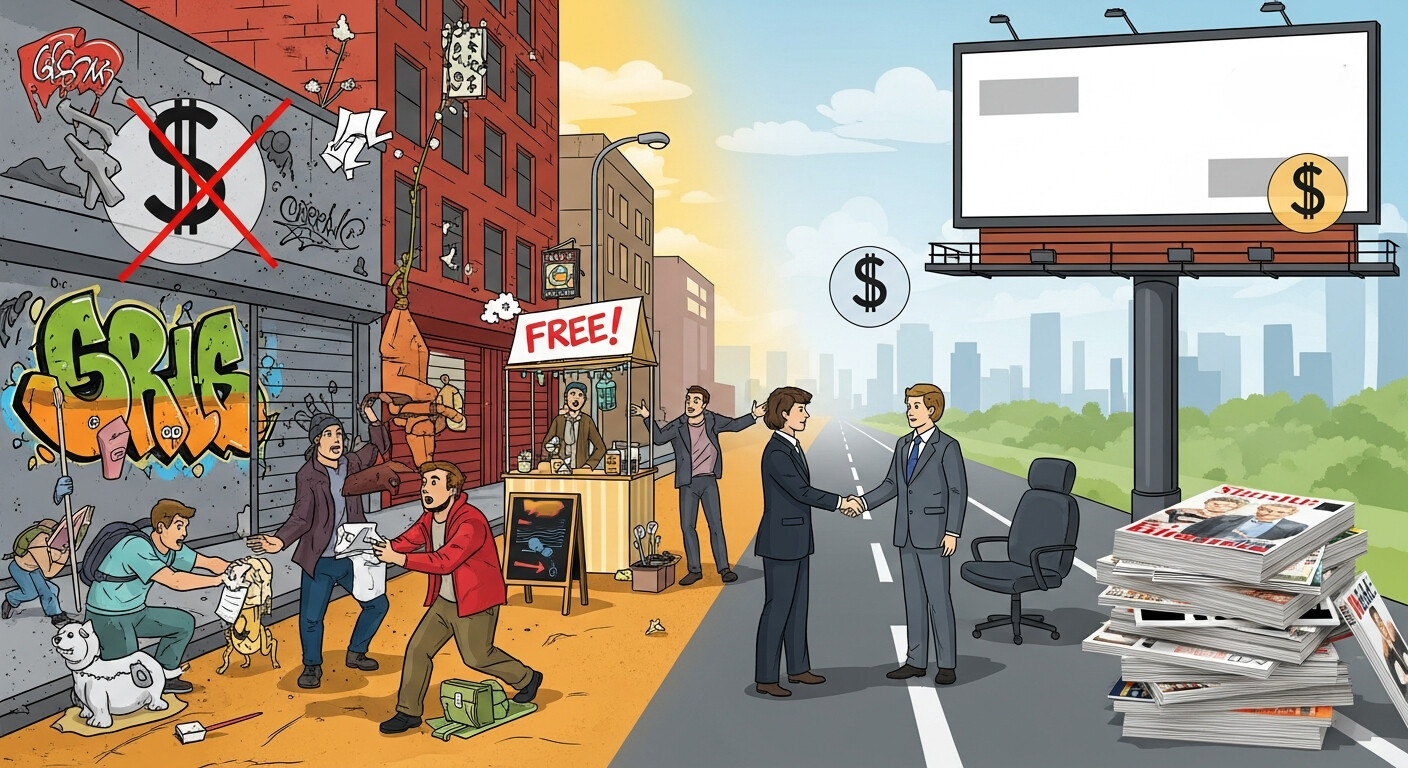
Audience interaction significantly influences how effective promotional campaigns become. Broad-reach advertising methods often expose messages to large groups but tend to generate passive responses, with limited long-term engagement. People may notice these ads without forming a strong connection. More creative initiatives focus on immersive experiences that encourage conversation, sharing, and direct participation. This approach helps audiences feel personally involved and emotionally connected to the brand. While interactive efforts typically deliver deeper engagement, broad advertising channels remain valuable for quickly reaching large audiences with consistent messaging. Combining both interaction-focused experiences and wide exposure can maximize impact and overall effectiveness.
Brand Awareness and Memorability
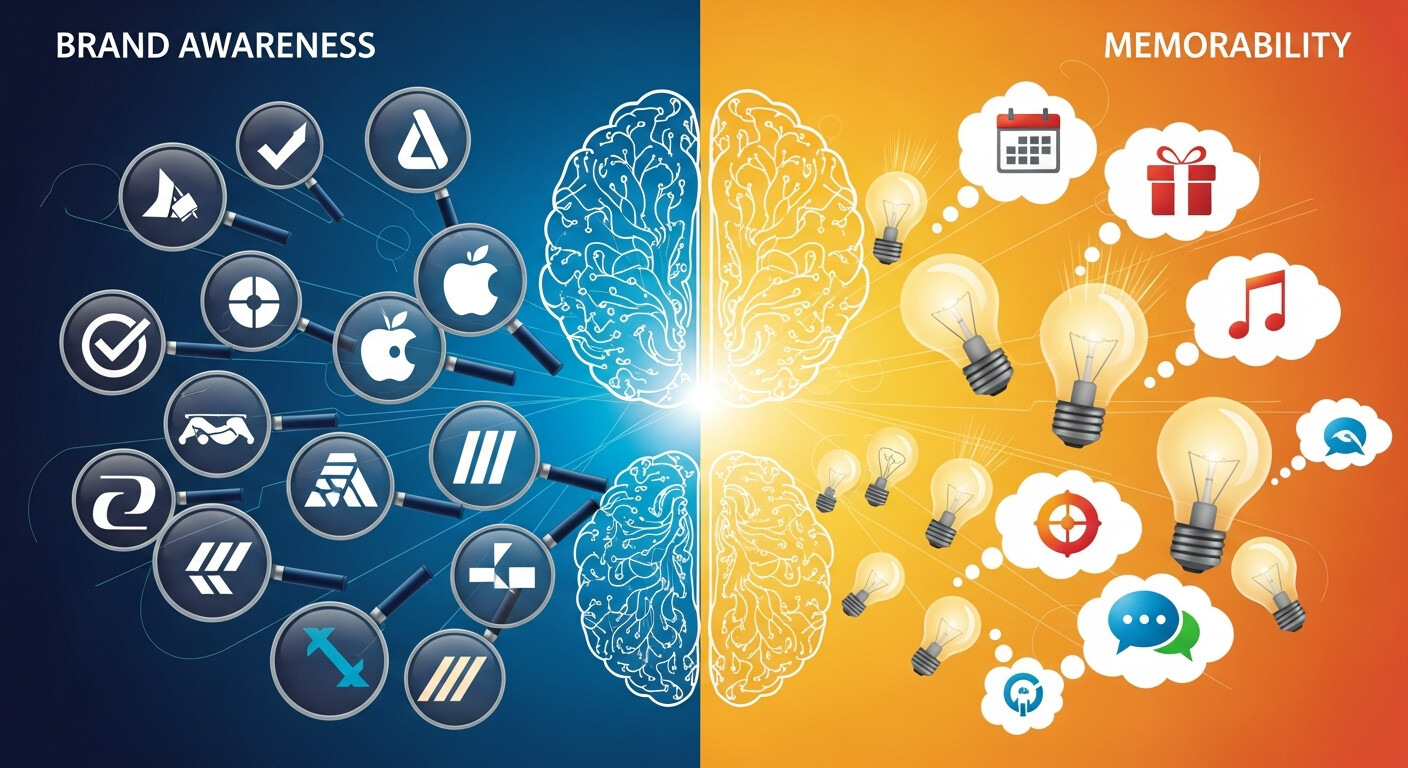
Brand recall plays a vital role in determining the success of promotional efforts. Established campaigns depend on consistent repetition to build familiarity and strengthen trust over time, particularly for well-known brands. Creative approaches, however, rely on emotional impact, originality, and unexpected elements to make messages memorable. A single, well-designed campaign can leave a lasting impression and spark conversation. While creative executions often generate immediate attention, consistent messaging supports long-term recognition. Blending memorable experiences with steady exposure allows businesses to capture interest quickly while reinforcing brand identity over time, leading to stronger audience connection and recall.
Role of Data-Driven Content Marketing
Modern marketing strategies increasingly depend on data-driven content to improve accuracy and effectiveness. Established advertising methods now rely on audience analytics to refine ad placement, messaging, and timing. Metrics such as reach, frequency, location, and demographics help brands make informed decisions and reduce wasted spending. Creative campaigns also benefit from performance insights, including social engagement signals, audience behavior patterns, and emerging trends. Data-Driven Content Marketing ensures campaigns connect with the right people at the right moment by aligning creativity with measurable insights. By blending analytics with storytelling, businesses can enhance performance tracking, sharpen messaging, and build smarter strategies that deliver consistent results and long-term value.
Impact on Customer Trust and Brand Credibility
Customer trust is a critical outcome of any marketing effort. Established advertising methods often perform well in building credibility because audiences are familiar with their formats and presence across respected media channels. Consistent exposure through trusted platforms helps brands appear reliable and professional over time.
Creative campaigns, however, can also strengthen trust when executed thoughtfully. Authentic storytelling, transparent messaging, and real-world engagement help audiences feel closer to a brand. When creativity aligns with brand values, it can humanize businesses and build emotional trust. The key lies in maintaining consistency between messaging and actions. Brands that balance creativity with reliability are more likely to earn long-term loyalty and position themselves as trustworthy voices in competitive markets.
Risk Factors in Guerrilla vs Traditional Marketing
Managing risk is an essential part of planning effective promotional campaigns. Established advertising approaches are typically more predictable, using familiar formats that align with audience expectations. Although results may develop gradually, potential issues are easier to anticipate and control. More creative efforts involve greater uncertainty, as bold ideas can be misunderstood or spark unintended reactions. However, when risks are carefully calculated, these campaigns can deliver significant rewards and strong visibility. Businesses must strike a balance between innovation and brand responsibility, ensuring every campaign reflects core values, respects audience sensitivity, and protects long-term reputation while pursuing growth.
Interactive Marketing Techniques and Customer Experience
Interactive approaches play a powerful role in shaping how audiences connect with brands. Traditional campaigns often rely on one-way communication, delivering messages without direct involvement. In contrast, modern initiatives focus on participation through live experiences, pop-up events, social challenges, and immersive activities. These interactive marketing techniques encourage audiences to engage, share feedback, and create their own content around a brand. By fostering emotional connections and real-time involvement, businesses can increase memorability and trust. Such experiences resonate strongly with digitally active consumers who value authenticity, creativity, and meaningful interaction over passive advertising messages.
Choosing the Right Strategy Based on Business Goals
Choosing the right promotional approach depends on clear business goals and growth priorities. Brands looking for rapid visibility and public excitement often adopt creative, unconventional tactics, while those focused on trust and steady exposure rely on established advertising channels. In many situations, success comes from matching methods to different stages of development rather than committing to a single style. New companies can benefit from bold ideas that attract attention, while mature organizations gain value from wide-reaching and reliable campaigns. Aligning promotional efforts with short-term objectives and long-term vision helps businesses maintain consistency, build recognition, and achieve sustainable growth.
How to Choose the Right Approach
- Define short-term vs long-term goals
- Evaluate available marketing budget
- Understand target audience behavior
- Assess brand risk tolerance
- Consider scalability needs
Strategy Selection Table
| Business Goal | Best Approach | Reason |
|---|---|---|
| Rapid Brand Awareness | Guerrilla Marketing | High creativity and buzz |
| Mass Market Reach | Traditional Marketing | Broad and consistent exposure |
| Limited Budget | Guerrilla Marketing | Cost-efficient execution |
| Brand Trust & Authority | Traditional Marketing | Established credibility |
| Sustainable Growth | Hybrid Strategy | Balanced impact and stability |
Scalability and Long-Term Strategy
Scalability plays a crucial role in long-term promotional planning. Established advertising methods are easier to expand across regions due to standardized formats, predictable costs, and consistent messaging. This approach supports steady brand development over time. More creative campaigns, however, can be challenging to replicate because they often require unique ideas and local customization. Despite this, digital-first initiatives have the potential to grow quickly through online sharing and audience participation. Businesses must decide whether their focus is on immediate attention or sustainable expansion. Choosing strategies that balance flexibility and consistency helps ensure long-term visibility and controlled growth.
Measuring ROI in Guerrilla vs Traditional Marketing
Evaluating return on investment plays a vital role in assessing marketing effectiveness. Established advertising channels often measure success through impressions, audience reach, and direct sales attribution, offering dependable but slower insights. More creative initiatives tend to prioritize engagement, online sharing, brand mentions, and audience interaction, which can generate faster visibility. However, these outcomes are sometimes more challenging to translate into direct financial results. By combining numerical data with qualitative feedback, businesses gain a clearer picture of overall impact. This balanced evaluation approach helps organizations understand campaign performance, refine future strategies, and measure long-term value beyond immediate sales outcomes.
Key ROI Measurement Factors
- Campaign cost vs audience reach
- Engagement levels (shares, comments, participation)
- Brand awareness Strategy
- Conversion and lead generation
- Long-term customer value
ROI Comparison Table
| Factor | Guerrilla Marketing | Traditional Marketing |
|---|---|---|
| Cost Investment | Low to medium | High |
| ROI Speed | Fast impact | Gradual |
| Measurement Style | Engagement-focused | Sales & reach-focused |
| Tracking Tools | Social analytics, surveys | Media metrics, sales data |
| Long-Term ROI | Variable | More predictable |
Role of Digital Platforms in Modern Marketing Strategies
Digital platforms have transformed how brands communicate with audiences. Online channels allow businesses to reach users instantly, test ideas quickly, and adjust campaigns in real time. Social media, search engines, and content platforms provide valuable feedback through engagement data and user behavior insights.
These platforms support both structured advertising and creative experimentation. Brands can run large-scale campaigns while also launching interactive experiences that encourage participation. Digital tools also enable personalization, making messages more relevant to individual users. As online consumption continues to grow, businesses that leverage digital platforms effectively can improve visibility, strengthen audience relationships, and adapt faster to changing trends while maintaining strategic consistency.
The Future of Marketing: Blending Both Approaches
The marketing landscape is shifting toward integrated strategies that combine reliability with innovation. Instead of relying on a single method, brands are merging proven advertising techniques with bold, creative ideas to remain competitive. Advances in technology are accelerating the importance of personalization, real-time engagement, and compelling storytelling. Successful campaigns now respond quickly to changing audience behavior and market trends. This flexible approach allows businesses to build trust while capturing attention in meaningful ways. By thoughtfully blending structured planning with creative execution, companies can strengthen brand loyalty, improve engagement, and support long-term growth in an increasingly dynamic and experience-driven marketplace.
Conclusion
Selecting the right marketing approach requires a clear understanding of business objectives, audience behavior, and available resources. Creative campaigns help brands stand out quickly, while established advertising methods build trust through consistent exposure. Each strategy offers unique advantages, and relying on only one can limit long-term potential. A balanced mix of creativity, data insights, and proven channels allows businesses to stay competitive in changing markets. By aligning marketing efforts with growth goals and customer expectations, brands can create meaningful connections, improve visibility, and achieve sustainable results in an increasingly dynamic and crowded marketing landscape.
Frequently Asked Questions (FAQs)
1. What is Guerrilla vs Traditional Marketing?
Guerrilla vs Traditional Marketing refers to the comparison between unconventional, creative marketing tactics and established advertising methods like TV, print, and radio. Both aim to grow Advertising Boosts Online Brand Awareness but differ in cost, execution, and engagement style.
2. Which is more cost-effective: Guerrilla vs Traditional Marketing?
Guerrilla marketing is generally more cost-effective because it relies on creativity rather than large advertising budgets. In the Guerrilla vs Traditional Marketing comparison, small businesses often prefer guerrilla tactics due to lower financial risk.
3. Is Guerrilla marketing suitable for small businesses?
Yes, Guerrilla marketing is ideal for small businesses with limited budgets. When analyzing Guerrilla vs Traditional Marketing, guerrilla strategies allow startups to compete creatively without heavy spending.
4. Does Traditional marketing still work in 2026?
Absolutely. Traditional marketing still delivers strong results for brand trust and mass reach. In Guerrilla vs Traditional Marketing, traditional methods remain effective for Long-Term Brand Recognition visibility and credibility.
5. Which approach delivers better audience engagement?
Guerrilla marketing usually delivers higher engagement through interactive and surprising campaigns. However, Guerrilla vs Traditional Marketing shows that traditional ads still perform well for consistent exposure.
6. Can businesses combine Guerrilla and Traditional Marketing?
Yes, many brands successfully blend both. Instead of choosing Guerrilla vs Traditional Marketing exclusively, combining them creates balanced campaigns with creativity and stability.
7. What are the risks of Guerrilla marketing?
Guerrilla marketing can be risky if campaigns are misunderstood or poorly executed. In Guerrilla vs Traditional Marketing, traditional methods are safer but less innovative.
8. How does data-driven content marketing support both strategies?
Data-driven content marketing improves targeting and performance measurement for both approaches. In Guerrilla vs Traditional Marketing, data helps optimize creativity and media placement.
9. Which marketing style is better for brand recall?
Guerrilla marketing often creates stronger short-term recall, while traditional marketing builds long-term recognition. Guerrilla vs Traditional Marketing highlights the importance of combining memorability with consistency.
10. What does the future hold for Guerrilla vs Traditional Marketing?
The future of marketing favors integration. Rather than debating Guerrilla vs Traditional Marketing, brands will focus on hybrid strategies using creativity, technology, and audience data.