
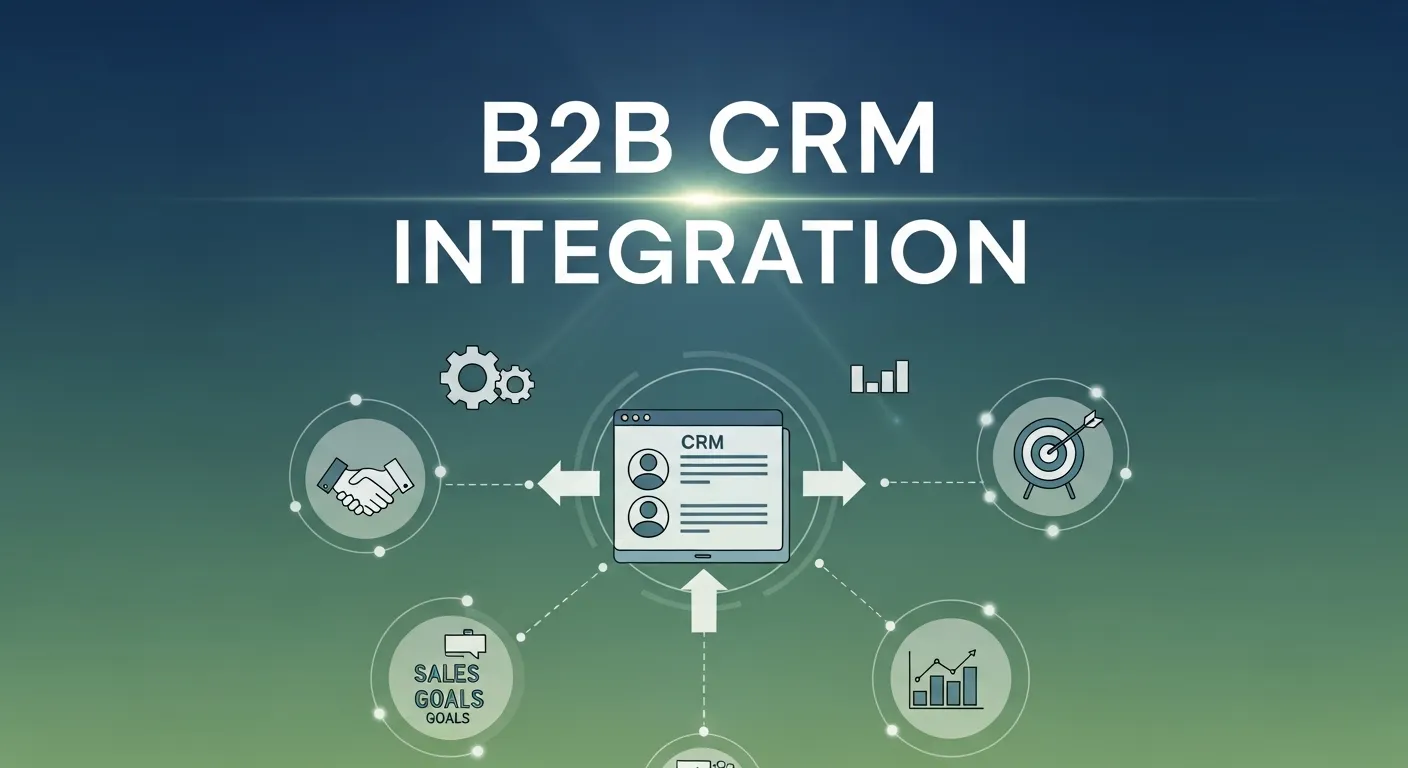
The article explores how connected digital tools streamline operations, improve customer engagement, and support data-driven decision-making. It emphasizes the importance of creative digital strategies in building efficient, scalable, and competitive business processes.
In today’s fast-paced business environment, companies need connected systems to manage customers, data, and workflows efficiently. Integrating core business tools helps reduce complexity, improve collaboration, and deliver consistent customer experiences. When supported by smart digital strategies, this connected approach enables businesses to scale operations, improve decision-making, and stay competitive in an increasingly data-driven market.
What Is B2B CRM Integration and Why It Matters
B2B CRM Integration refers to connecting a customer relationship management system with other business tools such as email platforms, ERP systems, marketing automation software, and analytics dashboards. This integration ensures that data flows seamlessly across departments without manual input. For B2B organizations handling complex sales cycles, this unified data structure improves decision-making and reduces operational inefficiencies. When CRM tools are integrated correctly, teams can track leads, manage accounts, and forecast revenue with higher accuracy. Adding Creativity in Digital Marketing allows businesses to use CRM insights to craft personalized campaigns that resonate with decision-makers. Ultimately, B2B CRM Integration enables smarter operations, faster responses, and stronger client relationships.
Key Benefits of Integrated Business Systems for B2B Teams

Integrated business systems help B2B teams work with greater clarity and coordination by connecting sales, marketing, and customer data into a single workflow. This unified approach reduces manual effort, improves transparency, and allows teams to focus on strategic tasks instead of administrative work. With accurate data available in real time, decision-making becomes faster and more reliable. When combined with creativity in digital marketing, integrated systems also support personalized communication and better campaign execution across channels.
Key benefits include:
- Improved data accuracy across departments
- Faster response times to customer inquiries
- Better alignment between sales and marketing teams
- More effective performance tracking and reporting
Table: Benefits and Business Impact
| Benefit Area | Impact on Business Operations |
|---|---|
| Centralized data | Reduces errors and duplicate information |
| Team collaboration | Improves internal communication |
| Process automation | Saves time and operational costs |
| Performance insights | Supports smarter strategic decisions |
How B2B CRM Integration Improves Operational Efficiency
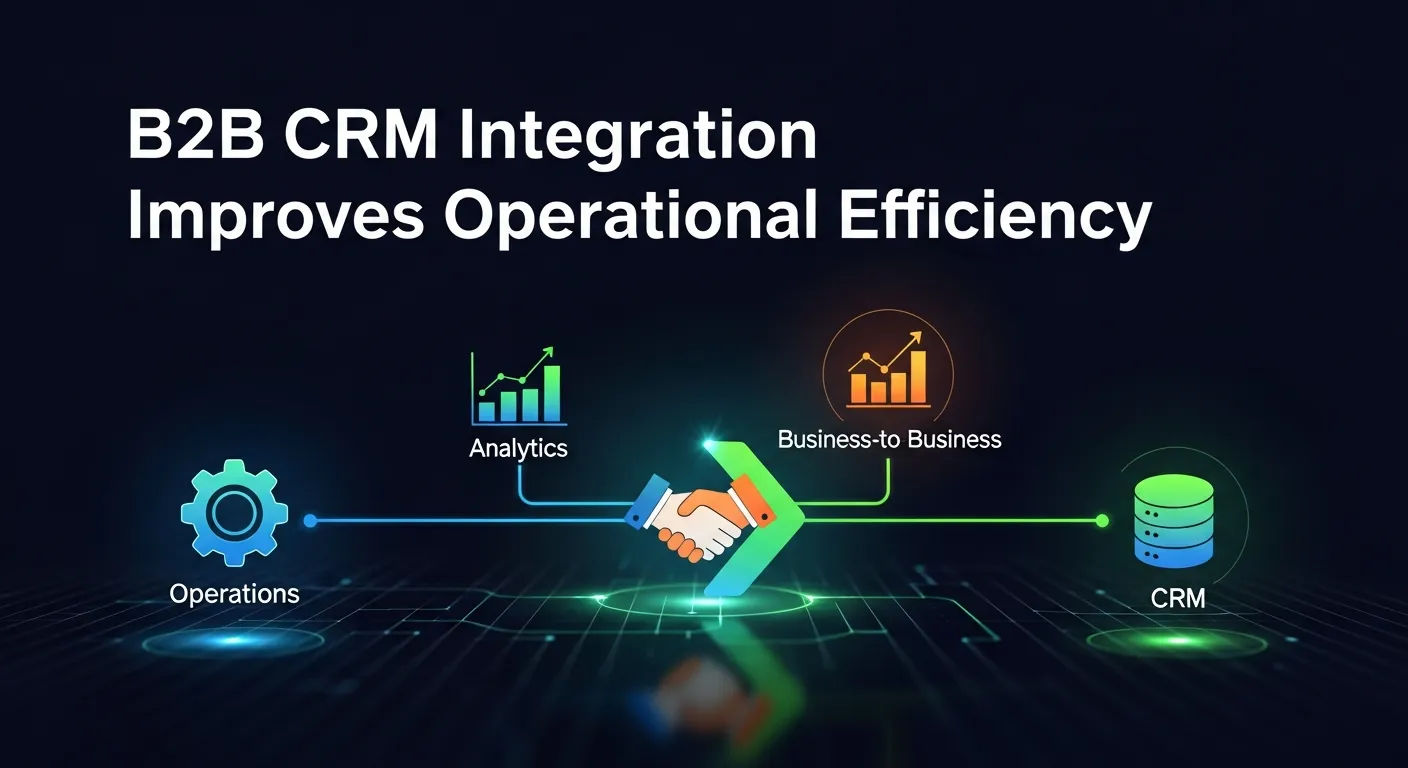
One of the biggest advantages of B2B CRM Integration is operational efficiency. Integrated systems reduce repetitive tasks by automating data entry, follow-ups, and reporting. Sales, marketing, and support teams gain access to real-time customer insights, allowing them to collaborate more effectively. This streamlined workflow eliminates delays caused by fragmented data sources. With Creativity in Digital Marketing, businesses can use CRM data to design engaging campaigns that align with buyer intent. Over time, B2B CRM Integration minimizes errors, improves productivity, and ensures that every team operates with the same accurate information, leading to smoother business operations.
Challenges and Best Practices for Successful Integration

While integrated systems offer strong advantages, businesses may face challenges such as data inconsistency, tool compatibility issues, or user adoption resistance. Addressing these challenges early helps ensure smooth implementation and long-term value. A clear strategy, proper training, and phased implementation reduce risks and improve outcomes. Creativity in digital marketing also benefits when systems are properly aligned, as teams can confidently use insights to design impactful campaigns.
Best practices to follow:
- Start with clear business goals and requirements
- Choose tools that align with existing workflows
- Ensure proper data migration and testing
- Train teams for consistent system adoption
Table: Challenges and Recommended Solutions
| Common Challenge | Recommended Solution |
|---|---|
| Data silos | Standardize data sources and formats |
| Tool compatibility | Select platforms with open integrations |
| User resistance | Provide training and ongoing support |
| Measurement issues | Define clear KPIs and reporting standards |
Enhancing Customer Experience Through B2B CRM Integration
Customer experience is a major differentiator in B2B markets, and B2B CRM Integration plays a vital role in enhancing it. Integrated CRM systems provide a complete view of customer interactions, purchase history, and preferences. This allows businesses to deliver timely, relevant, and personalized communication. When combined with Creativity in Digital Marketing, CRM insights help brands craft engaging touchpoints across email, social media, and content channels. B2B CRM Integration ensures faster response times, consistent messaging, and proactive customer support, ultimately strengthening trust and long-term relationships with clients.
B2B CRM Integration and SEO Strategy for Long-Term Growth
Content Marketing Strategies for Driving Results Using CRM Data
Content marketing strategies deliver stronger results when supported by connected customer data and clear performance insights. Tracking the customer journey helps marketers understand how audiences engage with content at every stage, making it easier to spot gaps and optimization opportunities. A data-driven approach ensures content remains relevant, timely, and aligned with real buyer pain points rather than assumptions. By combining creativity in digital marketing with formats like webinars, whitepapers, case studies, and personalized emails, businesses can attract and nurture prospects effectively. Continuous performance tracking enables teams to refine messaging, improve distribution, boost engagement, increase conversions, and achieve consistent, measurable marketing success over time. Read more about this topic: Content Marketing Strategies for Driving Results
Inspiring Interactive Content Ideas for B2B Brands
Businesses can create inspiring interactive content ideas for B2B brands by leveraging real customer insights from connected data systems. These insights reveal buyer preferences, engagement patterns, and common questions, helping marketers design meaningful interactive experiences. Formats such as quizzes, calculators, assessments, and personalized demos perform better when built around genuine customer needs instead of assumptions. Supported by creativity in digital marketing, interactive content becomes more engaging and improves lead qualification accuracy. This strategy drives deeper participation, increases time spent with content, and builds stronger prospect interest. By aligning creative formats with audience expectations and business goals, brands can deliver measurable value, foster trust, and support long-term growth.
Mastering Business-to-Business Lead Generation for Business Success
Mastering Business-to-Business lead generation for business success depends on understanding buyer intent, decision-making behavior, and engagement patterns. Integrated customer management systems make this process more efficient by collecting leads from multiple digital touchpoints and tracking their progress across the sales journey. This structured flow of information allows teams to apply accurate lead scoring, segment prospects effectively, and prioritize opportunities with higher conversion potential. When supported by creativity in digital marketing, businesses can build targeted campaigns that educate, engage, and nurture prospects over time. Personalized messaging and timely follow-ups strengthen trust and improve response rates. As a result, sales teams spend less time on unqualified leads and more time closing valuable opportunities, leading to improved performance and steady revenue growth.
Role of Creativity in Digital Marketing Within CRM Integration
Creativity in Digital Marketing plays a powerful role in transforming data into meaningful and engaging brand experiences. When insights from customer behavior and engagement are used effectively, marketers can tailor messaging, visuals, and offers to match specific audience needs. This personalized approach makes communication more relevant and builds stronger emotional connections with prospects. Creative storytelling, supported by accurate data, helps campaigns feel authentic rather than generic. It also improves engagement rates and strengthens brand recall across digital channels. By aligning creative ideas with measurable performance data, businesses can ensure their campaigns remain timely, consistent, and impactful. This thoughtful balance between imagination and technology allows organizations to compete effectively while maintaining efficiency and clarity in their marketing efforts.
Choosing the Right Tools for Successful B2B CRM Integration
Choosing the right technology stack plays a crucial role in building efficient and scalable business systems operations. Companies should assess platforms based on flexibility, ease of connection with existing systems, and future growth potential. Solutions that integrate smoothly with marketing automation, analytics tools, and sales software provide better visibility and operational control. When combined with creativity in digital marketing, these tools help teams design impactful campaigns driven by accurate and unified data. A thoughtful selection process reduces technical challenges and ensures smoother adoption across departments. By focusing on compatibility and long-term usability, businesses can build adaptable systems that support performance tracking, informed decision-making, and consistent results while maintaining the agility needed to evolve with changing market demands.
Conclusion
In conclusion, modern businesses must look beyond isolated tools and focus on building connected systems that support efficiency and scalability. When data flows smoothly across departments, teams can collaborate better, make informed decisions, and respond faster to customer needs. A unified operational approach improves workflow automation, strengthens customer relationships, and reduces manual effort. Supported by creativity in digital marketing, businesses can transform raw insights into personalized experiences that drive engagement and trust. This strategic alignment between technology and creativity allows organizations to stay competitive in evolving markets. By investing in integrated solutions and data-driven strategies, companies create a strong foundation for long-term success, consistent growth, and a seamless experience for both internal teams and customers.
FAQ Section
1.What is B2B CRM Integration?
B2B CRM Integration is the process of connecting a CRM system with other business tools like marketing automation software, sales platforms, and analytics software. This integration helps businesses manage customer data in one place, improve collaboration, and streamline daily operations.
2. Why is B2B CRM Integration important for growing businesses?
B2B CRM Integration is important because it removes data silos and improves visibility across teams. When sales, marketing, and support share the same data, businesses can respond faster, improve customer experience, and scale operations more efficiently.
3.How does B2B CRM Integration support lead generation?
With B2B CRM Integration, leads from websites, emails, and campaigns are automatically captured and tracked. This makes it easier to score leads, nurture prospects, and focus sales efforts on high-quality opportunities that drive revenue growth.
4.Can B2B CRM Integration improve content marketing performance?
Yes, B2B CRM Integration helps marketers understand what content attracts and converts leads. By using CRM insights, businesses can create targeted content, personalize messaging, and apply creativity in digital marketing for better engagement.
5.Is B2B CRM Integration useful for SEO strategy?
B2B CRM Integration supports SEO strategy for long-term growth by connecting customer behavior data with content performance. This helps businesses optimize keywords, improve content relevance, and align SEO efforts with real customer needs.
6.What tools are commonly used in B2B CRM Integration?
Common tools include CRM platforms like HubSpot, Salesforce, or Zoho, along with email marketing software, Advanced Analytics Tools, and marketing automation platforms. Choosing tools that integrate smoothly ensures better data flow and operational efficiency.
7.How long does it take to implement B2B CRM Integration?
The timeline depends on business size and system complexity. Simple integrations can take a few days, while advanced B2B CRM Integration projects may take several weeks to ensure accurate data mapping and smooth functionality.
8.Does B2B CRM Integration help improve sales team productivity?
Yes, B2B CRM Integration improves sales productivity by automating repetitive tasks such as data entry, follow-ups, and reporting. Sales teams get real-time access to customer insights, which helps them focus on closing deals instead of managing tools.
9.Can small and mid-sized companies benefit from B2B CRM Integration?
Absolutely. B2B CRM Integration is not only for large enterprises. Small and mid-sized businesses can use integrated CRM systems to organize customer data, improve lead nurturing, and apply creativity in digital marketing without increasing operational costs.
10.How does B2B CRM Integration support long-term business growth?
B2B CRM Integration supports long-term growth by creating a centralized system for customer data, performance tracking, and decision-making. This integrated approach helps businesses adapt to market changes, strengthen relationships, and build scalable processes over time.
11. How does B2B CRM Integration improve decision-making across teams?
B2B CRM Integration improves decision-making by giving teams access to shared, real-time customer data. This helps businesses make faster, more accurate decisions, improve forecasting, and align sales and marketing efforts effectively.