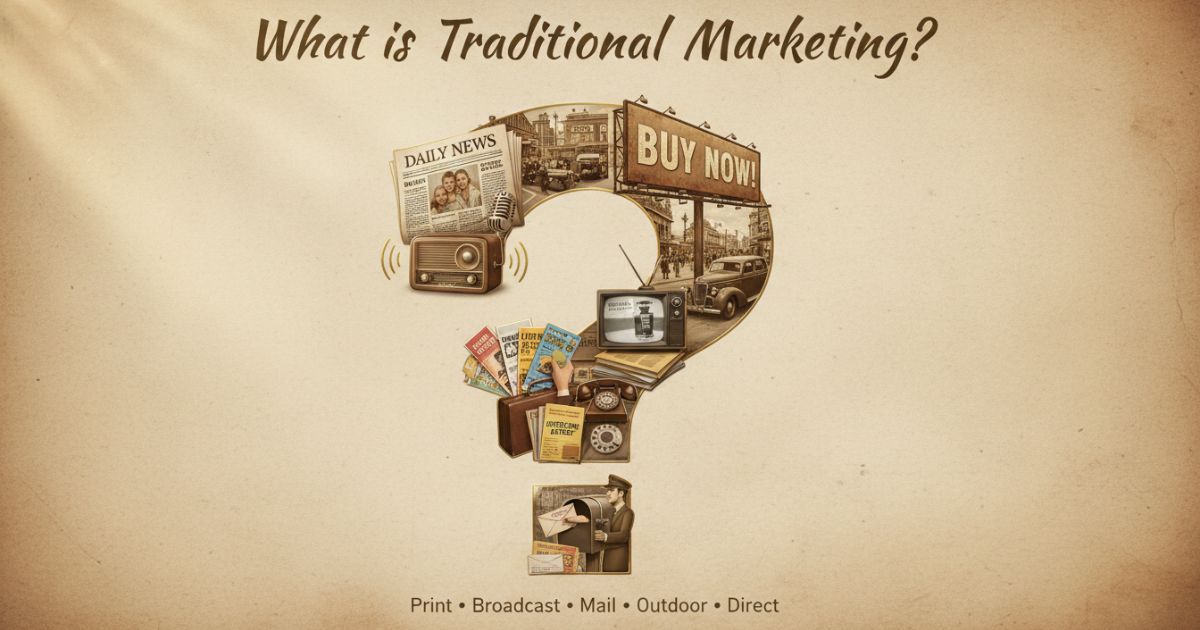
Traditional marketing is one of the oldest and most trusted ways for businesses to reach people. Even though digital marketing is growing fast, offline marketing methods still hold strong value. These classic strategies help brands connect with a wide audience using real-world traditional media channels like print ads, billboards, TV commercials, radio spots, flyers, and direct mail.
Traditional marketing works because it uses proven advertising methods that people are familiar with. Channels such as print advertising, outdoor advertising, and TV and radio marketing help businesses build strong brand awareness and reach customers who may not engage online. These offline channels also create a physical and memorable presence, which is a big advantage in competitive markets.
This guide will break down what traditional marketing means, the most common offline strategies, and why these methods still matter in the digital age. You’ll also learn how traditional marketing fits into the modern marketing mix and how to decide if these strategies are right for your business.
What is traditional marketing?
Traditional marketing is any type of marketing that uses offline channels to reach people. Instead of digital platforms, it relies on familiar traditional advertising methods like TV commercials, radio shows, newspaper ads, magazines, billboards, and other forms of print media. These are the classic tools businesses have used for decades to share their message and build brand awareness.
In simple words, traditional marketing spreads your message through physical or broadcast platforms. It focuses on catching attention in the real world and helping customers understand what your brand stands for.
Even though digital marketing is growing fast, traditional marketing isn’t going away. Many businesses still use it because it feels trustworthy and reaches audiences that online ads sometimes miss. Today, it works alongside digital strategies as part of a balanced marketing mix, giving brands a wider and more effective reach.
Types of Traditional Marketing

Traditional marketing comes in many forms, and each one offers its own strengths depending on your industry, target audience, and brand goals. These strategies rely on physical and offline channels, but they continue to play a powerful role in building trust, visibility, and long-term brand recognition. Below are the key types of traditional marketing every business should understand.
1. Print Advertising
Print advertising uses physical, printed materials—newspapers, magazines, brochures, flyers, and catalogs—to share a brand’s message. While it may seem old-fashioned, print still carries a sense of authority and credibility that digital ads often lack.
Key examples:
- Newspapers & Magazines: From small local ads to premium full-page spreads, print placements help brands reach highly targeted audiences.
- Brochures & Flyers: Ideal for event promotions, store openings, restaurants, and community-level marketing.
Why it works:
Print connects with readers in a tangible, memorable way. A well-designed brochure or magazine spread can instantly elevate a brand’s perceived quality and professionalism.
2. Broadcast Advertising
Broadcast advertising uses the reach and influence of television and radio to deliver messages to broad audiences. These channels have shaped consumer culture for decades and remain some of the most impactful forms of mass communication.
Key examples:
- Television Ads: Perfect for storytelling, brand-building, and creating emotional impact.
- Radio Ads: Highly effective for local marketing, brand reminders, and catchy audio campaigns.
Why it works:
Broadcast media blends sound, visuals, and emotion to create strong recall. TV commercials, especially, can turn a brand message into a cultural moment people remember.
3. Outdoor Advertising (Out-of-Home Advertising)
Outdoor or OOH advertising reaches people as they move through public spaces. These ads aim to capture attention quickly and make a visual impression that lasts.
Key examples:
- Billboards: Large, bold, and placed in high-traffic areas.
- Transit Advertising: Seen on buses, trains, stations, and taxis.
- Posters & Street-Level Ads: Displayed in malls, sidewalks, and retail environments.
Why it works:
Outdoor ads benefit from frequency. When people see the same billboard or transit poster repeatedly, the message becomes familiar—and familiarity builds trust.
4. Direct Mail Marketing
Direct mail involves sending postcards, catalogs, letters, and promotional offers directly to people’s homes. It’s one of the most targeted forms of offline marketing.
Why it works:
Direct mail feels personal and intentional. Unlike crowded email inboxes, a physical piece of mail stands out and often gets more attention. This makes it a powerful tool for local businesses, subscription brands, and customer loyalty campaigns.
5. Telemarketing
Telemarketing uses phone calls to reach potential customers. It is commonly used for lead generation, product promotion, follow-up calls, and customer satisfaction surveys.
Why it works:
Telemarketing creates a real conversation. It allows businesses to address concerns immediately, build rapport, and guide someone through the buying journey in a highly personal way.
6. Event and Sponsorship Marketing
Event and sponsorship marketing focuses on direct, face-to-face interaction and community presence. It includes trade shows, business fairs, product launches, seminars, workshops, and local events.
Sponsorships—such as supporting sports teams, school programs, cultural festivals, or charity events—help brands gain positive visibility and show genuine commitment to the community.
Why it works:
Events help people experience a brand firsthand, which builds deeper trust. Sponsorships add emotional value by associating the brand with community support and meaningful causes.
7. Retail and In-Store Marketing
Retail and in-store marketing aims to influence customers during the shopping process. These strategies highlight specific products and guide buying decisions inside physical stores.
Key examples:
- POP Displays & Signage
- Sampling Booths & Product Demos
- Shelf Talkers & Promo Labels
- In-store Events & Flash Sales
Why it works:
Most purchase decisions happen inside the store. In-store marketing helps brands stand out at the exact moment customers are ready to buy, increasing both sales and overall customer satisfaction.
What are the advantages and disadvantages of traditional marketing?
Traditional marketing remains one of the most reliable ways for brands to reach audiences through offline marketing and well-established traditional advertising channels. Even in the digital era, methods like print media marketing, TV, radio, and outdoor ads continue to play a major role in building customer trust and enhancing brand visibility. However, like any strategy, it comes with both strengths and limitations. Below is a clear breakdown of the advantages of traditional marketing and the challenges businesses should consider.
Advantages vs. Disadvantages of Traditional Marketing
| Category | Advantages | Disadvantages |
|---|---|---|
| Reach & Exposure | Reaches a wide audience quickly through mass media such as TV, radio, and newspapers. | Limited targeting options; cannot personalize messages like digital ads. |
| Credibility | Traditional channels like print and TV enhance customer trust and brand authority. | High competition in crowded media reduces impact. |
| Brand Visibility | Strong presence through billboards and outdoor ads increases long-term brand visibility. | Hard to track who actually sees the ads. |
| Local Marketing | Effective for local marketing strategies, especially for businesses targeting specific geographic areas. | Limited reach outside local zones unless spending increases. |
| Simplicity | Easy to understand for all demographics, including non-digital audiences. | Less flexible — changes require time and additional printing or production. |
| Durability | Print ads (magazines, brochures) last longer and can be revisited multiple times. | Physical materials can be costly to produce and distribute. |
| Impact | TV and radio ads deliver high emotional impact through sound and visuals. | Expensive to create and run compared to digital formats. |
What Is a Traditional Marketing Strategy?

A traditional marketing strategy is a planned approach that uses offline marketing channels to promote a brand, product, or service. Instead of relying on digital platforms, it focuses on traditional media channels like print ads, TV commercials, radio spots, direct mail, and billboards. These methods help businesses build brand visibility, strengthen credibility, and reach both local and mass audiences through familiar, real-world touchpoints.
In simple terms, it’s a conventional marketing approach that outlines how a business will communicate its message using physical or broadcast mediums.
Key Elements of a Traditional Marketing Strategy
- Print Advertising: Newspapers, magazines, brochures, and flyers.
- Broadcast Media: TV and radio commercials that reach wide audiences.
- Outdoor Advertising: Billboards, posters, transit ads, and signage.
- Direct Mail: Postcards, catalogs, coupons, and promotional letters.
- Event Marketing: Trade shows, exhibitions, seminars, and sponsorships.
- In-Store Promotions: POP displays, shelf talkers, product demos, and posters.
Why Businesses Use Traditional Marketing Strategies
- Strong brand awareness through high-visibility channels.
- Higher levels of consumer trust compared to digital ads.
- Effective for local marketing and community-focused campaigns.
- Ideal for mass marketing tactics that target wide audiences.
- Complements digital campaigns for a more integrated marketing strategy.
What Are the Challenges of Traditional Marketing?

Traditional marketing remains powerful, but it also comes with several limitations that businesses must consider. These traditional marketing challenges often affect budgeting, tracking, and campaign flexibility. Understanding these issues helps you create a more balanced strategy that blends offline promotion with digital channels.
1. High Costs
Traditional advertising—especially TV, radio, and large print ads—can be expensive. Producing a TV commercial, buying airtime, or renting billboard space requires a big budget. These high marketing costs make it difficult for smaller businesses to experiment or run multiple campaigns at once.
2. Limited Tracking and Measurement
Unlike digital marketing, traditional methods offer limited data. You cannot accurately measure how many people saw a billboard or responded to a newspaper ad. This leads to tracking difficulties and measurement limitations, making it harder to calculate ROI or optimize a campaign.
3. Less Flexibility
Traditional ads are often locked into fixed formats and schedules. Once a magazine ad is printed or a billboard is installed, you cannot change it without extra cost. This creates limited campaign flexibility, especially compared to digital ads that can be updated anytime.
How Traditional Marketing Fits into Modern Strategies
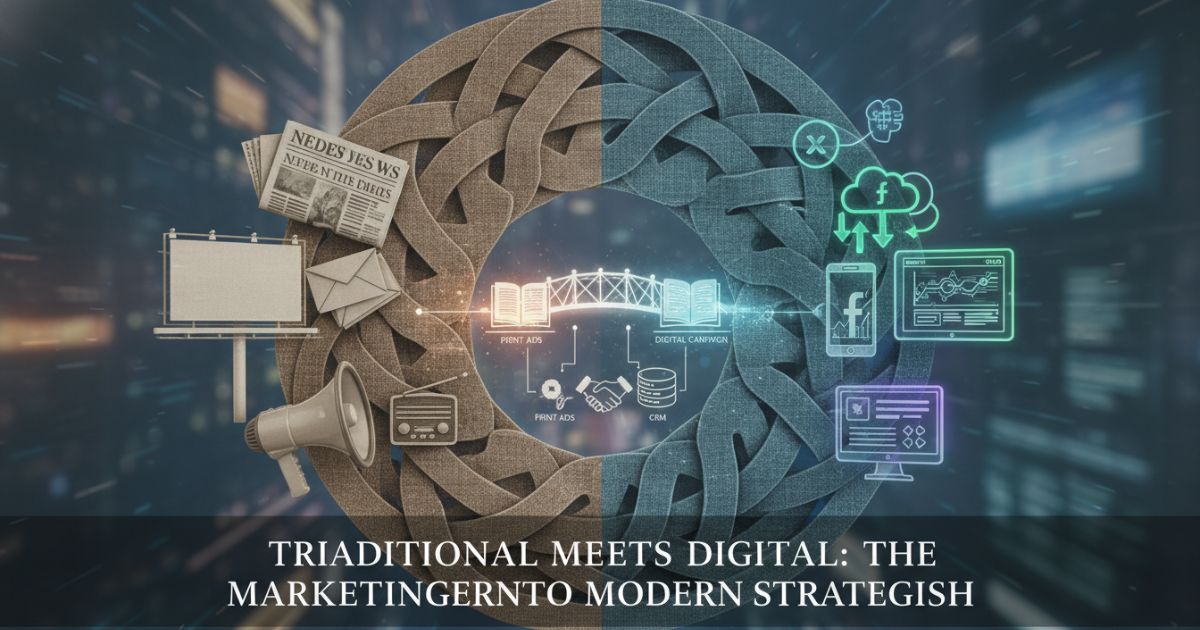
Traditional marketing isn’t outdated—it simply plays a new role in today’s digital-first world. Instead of standing alone, it now works best as part of a wider integrated marketing strategy. When combined with digital platforms, traditional methods create a powerful omnichannel marketing experience that reaches audiences both offline and online.
In an era where businesses often compare AI vs Traditional Marketing Strategies, the truth is that both can work together. While AI enhances personalization and automation, traditional marketing strengthens credibility and real-world visibility. Blending the two gives brands the best of both worlds.
Modern consumers move between TV, social media, websites, stores, and mobile apps. Because of this, businesses use a traditional and digital marketing mix to stay visible at every touchpoint. Traditional channels build broad brand awareness, while digital tools handle engagement, personalization, and conversion.
Examples of Effective Integration
1. Hybrid Campaigns
A brand may run TV, radio, or print ads to reach mass audiences, then guide viewers to their website, landing page, or social media profiles.
This offline-to-online strategy helps brands generate awareness offline and convert customers online.
For example:
- A TV commercial ends with a QR code linking to a product page.
- A radio ad encourages listeners to follow the brand’s Instagram for exclusive offers.
2. Event Promotion Across Multiple Channels
Traditional channels like direct mail, flyers, and posters can be highly effective when paired with digital tools.
Example:
- A business sends printed invitations for a local workshop.
- At the same time, they create a digital event page, run social ads, and use email reminders.
This cross-channel campaign approach ensures maximum visibility and increases attendance by reaching people wherever they spend their time.
Is traditional marketing still effective?
Traditional marketing is still highly effective, even in an age dominated by digital platforms. Many brands continue to rely on traditional media channels because they deliver strong consumer trust, broad reach, and memorable offline experiences. Whether it’s print marketing, broadcast media, or outdoor billboards, these conventional marketing methods provide something digital often struggles with: credibility and long-lasting visibility.
Traditional marketing also excels in environments where online competition is overwhelming. A striking billboard on a busy road or a powerful TV spot during prime time often creates stronger brand recall than an ad that disappears in a crowded social media feed. When combined with digital tools, offline advertising becomes part of an effective integrated marketing mix, helping brands stay visible on multiple fronts.
Why Traditional Marketing Remains Effective
High Trust and Credibility: Consumers often trust traditional ads more because they feel authentic and established.
Wide Reach for Mass Audiences: Ideal for mass-market advertising where brands want to reach large groups quickly.
Stronger Local Presence: Perfect for regional businesses aiming for better offline brand visibility.
Long-Lasting Impressions: Billboards, posters, and magazine ads stay in front of people for days or weeks.
In short, traditional marketing is far from outdated. It continues to work best when paired with digital strategies, forming a powerful balance between online reach and offline impact.
Final Thoughts on Traditional Marketing
Even though the marketing landscape continues to evolve with new digital tools, traditional marketing still holds strong value. When used with intention, traditional media—from print brochures to billboards—can deliver meaningful impact, especially in building consumer trust and boosting offline brand visibility. These conventional advertising methods create a physical presence that digital ads simply can’t replicate.
The real power comes from blending offline marketing with your digital strategy. When businesses combine traditional tactics with online channels, they create a more complete, omnichannel marketing experience. This integrated marketing mix reaches customers at multiple touchpoints, increases engagement, and strengthens brand recall.
Traditional marketing isn’t about holding onto the past. It’s about using timeless marketing methods in a modern way—leveraging their strengths to stay relevant, credible, and memorable.
Want to improve your overall marketing approach? Keep exploring our guides for insights on new trends, smarter strategies, and how to merge offline and online efforts for maximum impact.
FAQs
1. Why is traditional marketing important?
Traditional marketing is important because it builds strong brand awareness through trusted offline marketing channels like TV, radio, and print. These platforms reach audiences who may not be active online and help brands create memorable, real-world impressions. Traditional media also carries a sense of credibility, which boosts customer trust.
2. What is a key characteristic of traditional marketing?
A key characteristic of traditional marketing is its physical and broadcast-based communication. Whether it’s a billboard on a busy road or a printed brochure, traditional marketing creates a tangible presence that digital ads cannot replicate. It focuses on mass reach, repetition, and visibility through conventional advertising methods.
3. What are the 4 P’s of traditional marketing?
The 4 P’s of traditional marketing—also known as the marketing mix—include:
- Product – What you’re selling.
- Price – How much it costs.
- Place – Where it’s sold or distributed.
- Promotion – How you communicate the message (print ads, TV, radio, events, etc.).
These four elements form the foundation of any successful traditional or modern marketing plan.
4. Why is traditional marketing effective?
Traditional marketing is effective because it reaches large audiences, builds long-lasting impressions, and delivers a level of authenticity that digital ads sometimes lack. TV commercials, radio spots, and billboards generate strong brand recall, while printed materials help reinforce trust through a physical, credible format. When blended with digital efforts, traditional marketing becomes even more powerful.