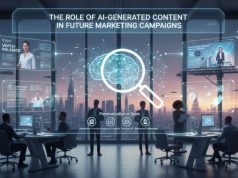

Artificial intelligence (AI) is no longer just some futuristic technology; it’s a functional tool that is changing the way companies do marketing. In 2025, using artificial intelligence will be a matter of survival in a highly competitive market. But with all of these AI tools and tactics, is it possible to make your campaigns smarter, faster, and more effective?
This post is going to cover how you can start to incorporate AI capabilities into your marketing and look at some tools which we can all use at our level, from personalisation to the use of predictive analytics. Veteran marketer or new marketing professional, learn strategies you can implement today to stay ahead of the curve.
The Power of AI in Marketing
AI tools are changing marketing through automating repetitive tasks and analyzing complex data sets, and predicting customer behaviors. They are taking the guesswork out of the equation for marketers by letting them make data-driven decisions that help them accelerate whatever it is that they are trying to do.
Advantages of AI In Marketing
- Scale Personalization: Personalize at Scale with ultra-targeted content.
- Increased Effectiveness: Save time by using automation to manage email campaigns, then create and schedule ads and social posts.
- Further Understanding: Utilize predictive analytics to understand what will happen in the future.
- Improved ROI: Achieve a higher return on your marketing investment with better campaigns.
With these advantages in mind, AI isn’t merely a differentiator, as it has already provided benefits to those who have embraced it — it’s increasingly becoming an essential capability for any marketing team that wants to beat the competition going into 2025.
1. Personalize Campaigns With the Help of AI Tools

We know the one-size-fits-all is over. Customization can’t just be optional. The people you are doing business with also expect the brands they are doing business with to predict their needs and address them directly. Artificial intelligence powers this ability to target messages with precision, making it seamless for the consumer.
Use Case 1: Email Marketing
AI tools such as Mailchimp and ActiveCampaign parse through previous email exchanges to recommend the best time of day to send out a message, and to customize the nature of the content for each recipient. AI subject line generators can also ensure your emails are unignorable!
Use Case 2: Dynamic Website Content
AI engines such as Optimizely use your visitors’ behavior data to present personalized website experiences. For example, a new visitor might see a welcome offer, whereas a returning visitor could be presented with targeted product recommendations.
Actionable Tip: Begin with a small one, such as an AI tool to personalize some part of your customer experience, such as email subject lines.
2. Use Predictive Analytics for Better Decision Making
Predictive analytics is one of AI’s most impressive abilities. Using historical data, AI can predict customer actions and campaign results, giving marketers the ability to act in advance.
Use Case 1: Customer Preference Prediction
Google Cloud Recommendations AI analyzes customer behavior to help e-commerce brands suggest products and predict the chance of purchase.
Use Case 2: Ad Spend Optimization
Platforms such as Adzooma and Acquisio apply machine learning to ensure that businesses are spending their ad budget on campaigns that are performing the best.
Actionable Tip: Add an AI-driven predictive analytics platform to start processing data on how your campaign is going.
3. Automate and Maximize Content Producing
With the help of AI, companies are transforming the way they produce content by adding automation to tasks that were previously done manually, and often consumed significant amounts of time.
AI Writing Tools
Jasper and Writesonic create blog content, post on social media and write ad copy customized for certain audiences. Canva’s Magic Write proposes text for graphics in visual-heavy marketing campaigns.
NLP in Content Writing
Advanced instruments make the text ‘human-like.’ For instance, AI-created summaries of blog posts save bloggers hours of manual editing.
Actionable Tip: Leverage AI for ideas you may not have considered. Use AI to provide an opening draft of your campaign materials.
4. Make Social Media Management Easier with AI

Social media is an important marketing tool in 2025, but staying current on trends and algorithm changes across different platforms is difficult. This is a process that is facilitated by AI tools.
Use Case 1: Content Scheduling and Optimisation
AI scheduling tools like Buffer and Hootsuite recommend the best time to post depending on when your audience is most active and save time by scheduling weeks’ worth of content ahead of time.
Use Case 2: Monitor Customer Engagement
AI-powered solutions such as Sprout Social automatically analyze sentiment from comments and messages to extract actionable insights on how to enhance brand reputation.
Actionable Tip: Concentrate on one social platform at first. Track it and tweak your strategy as required with the help of an AI tool.
5. Promote Customer Experience with Chatbots and Virtual Assistants

Advertising and sales are important, but when you speak of an existing customer, their experience is what matters.
Leading Examples of AI Chatbots
- Drift: For better conversational marketing that converts leads to customers.
- Zendesk AI: Automates support inquiries and routes them efficiently.
Actionable Tip: Include a chatbot on your website to manage frequently asked questions and simple customer requests so your team can focus on more complex work.
6. Use Advanced Analytics for Competitive Advantage
AI can render data analysis more approachable and actionable. Services like HubSpot that plug into your CRM provide valuable analytical data and reporting dashboards that display the effectiveness and ROI of your campaign tactics.
Real-Time Analytics
AI reviews campaign performance on the fly, meaning it can pivot rapidly if something isn’t working.
Actionable Tip: Use an AI-powered analytics software to measure and report campaign results effortlessly.
Why Businesses Will Need AI in 2025 and Beyond
AI can do more than just save time— it empowers smarter decisions, more customer connections, and a higher ROI. With advancements in technology and changing consumer expectations, integrating AI-powered tools will make your marketing campaigns a step ahead.
Take Action Today
Don’t put off incorporating AI into your marketing plan. You can start simple with a task-specific tool or go big with a full AI marketing platform. Just remember, smart marketing begins with one decision.