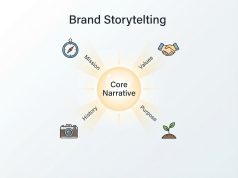

The Power of Narrative in Modern Marketing
In today’s digital landscape, traditional advertising methods are rapidly losing effectiveness. Consumers are bombarded with over 5,000 marketing messages daily, creating an environment where attention is scarce and trust is even rarer. This saturation has given rise to a marketing approach that cuts through the noise: storytelling marketing.
Storytelling marketing is the strategic use of narrative techniques to convey your brand’s message, values, and offerings in a way that resonates emotionally with your audience. Rather than simply presenting features and benefits, storytelling marketing creates meaningful connections through authentic narratives that engage, inspire, and motivate your customers.
According to a recent study by OneSpot, 92% of consumers want brands to create content that feels like a story. This preference for narrative isn’t just a passing trend—it’s wired into our biology. Humans have been sharing stories since the dawn of language, making storytelling the oldest and most natural form of communication.
At CreativeMarketo, we’ve seen firsthand how powerful storytelling can transform marketing effectiveness. This comprehensive guide will walk you through everything you need to know about storytelling marketing and how to implement it successfully for your brand.
Why Storytelling Works in Marketing: The Science Behind Narrative
Before diving into the practical aspects of storytelling marketing, it’s important to understand why stories are so effective from a scientific perspective.
The Neurological Impact of Stories
When consumers encounter straightforward marketing messages, typically only the language processing parts of their brains activate. However, when they experience a story, something remarkable happens—multiple additional areas of the brain light up as if they were experiencing the events themselves.
This phenomenon, known as neural coupling, explains why stories feel so immersive. When you tell a compelling story:
- The sensory cortex activates when you describe sensory details
- The motor cortex engages when you portray movement
- The emotional centers trigger when you evoke feelings
This multi-sensory engagement creates what neuroscientists call “transportation”—the feeling of being mentally transported into the story world. According to research published in the Journal of Consumer Research, this transportation effect makes consumers:
- 22% more likely to change their beliefs based on the narrative
- 44% more likely to remember key brand messages
- 32% more receptive to associated product offerings
The Chemical Response to Stories
Stories don’t just activate brain regions—they trigger powerful neurochemical responses:
- Dopamine is released when experiencing an emotionally charged story, aiding memory formation and attention
- Oxytocin increases during character-driven narratives, building trust and connection
- Cortisol heightens during moments of tension, creating focused attention
- Endorphins emerge during humorous or uplifting story elements, generating positive associations
This chemical cocktail creates the perfect environment for marketing messages to be received, remembered, and acted upon.
The Core Elements of Effective Storytelling Marketing
Now that we understand why storytelling works so powerfully, let’s explore the essential components that make up effective storytelling marketing.
1. Authentic Character Development
Every great story needs compelling characters. In marketing, these characters might be:
- Your brand personified
- Your customers (as heroes of their own journeys)
- Your founder(s) and their vision
- Employees who embody your values
- Fictional characters that represent your ideal customer
The key is authenticity. Modern consumers have highly developed “authenticity detectors” and quickly dismiss narratives that feel contrived or manipulative. Characters should feel real, relatable, and true to your brand identity.
2. Emotional Core and Brand Values
Effective marketing stories aren’t just entertaining—they’re vessels for your brand values. Every story should have an emotional core that aligns with your brand’s purpose and resonates with your audience’s aspirations.
Consider how Patagonia’s stories consistently center on environmental responsibility, or how Apple’s narratives focus on innovation and creative empowerment. These emotional cores create a consistent brand identity that customers can connect with on a deeper level.
3. Conflict and Resolution Framework
Every memorable story contains conflict—a challenge that must be overcome. In marketing storytelling, this typically manifests as:
- A problem your customer faces
- An obstacle to achieving a desired outcome
- A misconception about your industry
- A limitation of existing solutions
Your product or service should naturally emerge as the resolution to this conflict, but not in a way that feels forced or overly promotional. The resolution should feel earned and meaningful within the story context.
4. Sensory Details and Immersion
The most powerful marketing stories engage multiple senses through vivid language and imagery. This sensory richness activates various brain regions, creating a more immersive and memorable experience.
For example, rather than simply stating “our coffee is high-quality,” a coffee brand might tell a story about “the morning mist hanging over Colombian highlands, where farmers carefully hand-select beans as the sun breaks through the clouds, releasing the rich aroma of the harvest.”
Implementing Storytelling Across Marketing Channels
Storytelling marketing isn’t limited to a single format—it can and should be integrated across all your marketing channels. Here’s how to adapt your storytelling approach for different platforms:
Website and Landing Pages
Your website is often the first comprehensive touchpoint for potential customers. Implement storytelling through:
- An engaging “About Us” page that shares your origin story
- Customer journey narratives that guide visitors through the site
- Interactive elements that invite visitors to become part of the story
- Visual storytelling through thoughtful imagery and design
The most effective website stories follow a clear arc while still allowing visitors to navigate intuitively. According to UX research from Nielsen Norman Group, websites that incorporate storytelling elements see 30% higher engagement rates than purely informational sites.
Content Marketing and Blog
Your blog provides the perfect canvas for longer-form storytelling. Potential approaches include:
- Case studies framed as customer hero journeys
- “Behind the scenes” narratives about your product development
- Serialized content that builds anticipation and loyalty
- Origin stories about how specific products or features came to be
Content marketing stories should balance entertainment value with educational content, creating what content strategists call “infotainment”—content that informs while it engages.
Social Media Storytelling
Social platforms require a more concise storytelling approach but offer unique opportunities through:
- Instagram Stories and Reels for visual micro-narratives
- Twitter threads that unfold narrative elements sequentially
- Facebook Live for real-time storytelling and audience interaction
- User-generated content that incorporates customer perspectives
Each platform has its own storytelling strengths. For instance, LinkedIn favors professional journey narratives, while TikTok rewards creative, high-energy story formats.
Email Marketing Sequences
Email allows for episodic storytelling that builds relationships over time:
- Welcome sequences that introduce your brand story
- “Origin story” emails that build connection with new subscribers
- Problem-agitation-solution narratives that lead to conversions
- Behind-the-scenes stories that make subscribers feel like insiders
Email sequences benefit from storytelling continuity—each email should feel like another chapter in an ongoing narrative relationship with your audience.
5 Storytelling Marketing Examples That Drive Results
Let’s examine some remarkable examples of storytelling marketing in action:
1. Airbnb: “Belong Anywhere”
Airbnb masterfully uses storytelling by focusing not on properties but on the transformative experiences of travelers and hosts. Their “Belong Anywhere” campaign showcases real stories of connections made through their platform, positioning the company not as a lodging service but as a facilitator of meaningful human experiences.
This narrative approach has helped Airbnb transcend the traditional hospitality industry positioning and create an emotional connection that drove their valuation to over $100 billion.
2. TOMS: “One for One”
TOMS founder Blake Mycoskie built his entire brand around the story of his travels in Argentina, where he witnessed children without shoes. This narrative became the foundation of the company’s “One for One” business model, where every purchase helps someone in need.
This compelling origin story transformed a simple shoe company into a movement, inspiring millions of customers to become characters in the broader narrative of social change through conscious consumption.
3. Nike: “Just Do It” Individual Stories
While “Just Do It” is Nike’s tagline, their most powerful marketing comes from the individual stories they tell. From unknown athletes overcoming obstacles to Colin Kaepernick’s controversial stand, Nike doesn’t sell shoes—they sell the story of human potential.
This approach has created profound brand loyalty that transcends product features, with customers seeing Nike products as symbols of their own personal narratives of determination and achievement.
4. Dove: “Real Beauty”
Dove revolutionized beauty marketing by shifting from product-focused advertising to stories that challenge beauty standards. Their “Real Beauty” campaign tells the stories of ordinary women embracing their authentic selves in a world of unrealistic beauty ideals.
This storytelling approach not only differentiated Dove in a crowded market but also created a movement that resonated deeply with their target audience, resulting in a 600% increase in product sales over the campaign’s first decade.
5. Spotify: “Wrapped”
Spotify’s annual “Wrapped” campaign transforms user data into personalized stories about each listener’s year in music. By turning usage statistics into shareable narratives, Spotify creates millions of unique stories that users eagerly share, generating massive organic reach.
This innovative approach to data storytelling has become a cultural event, with hundreds of millions of social shares each year and significant spikes in app downloads during the campaign period.
Measuring the Impact of Your Marketing Stories
Like any marketing strategy, storytelling should be measured for effectiveness. Here are key metrics to track:
Engagement Metrics
- Time spent on story-driven content
- Scroll depth on narrative pages
- Social sharing and story amplification
- Comments and conversation around your narratives
Emotional Response Indicators
- Sentiment analysis of comments
- Direct feedback on storytelling elements
- Emotional reaction selections (like Facebook’s reaction options)
- Qualitative surveys about brand connection
Conversion Metrics
- Conversion rates on story-driven landing pages vs. traditional pages
- Email open rates for narrative-based subject lines
- Click-through rates on storytelling content
- Return visitor rates for narrative content
According to research by OneSpot, branded content that tells a story sees up to 55% higher conversion rates compared to traditional marketing material. This dramatic difference highlights the importance of not just implementing storytelling marketing, but measuring its specific impact on your business outcomes.
Common Storytelling Marketing Pitfalls to Avoid
Even with the best intentions, marketers can fall into several storytelling traps:
1. Inauthenticity and Forced Narratives
Consumers have highly tuned authenticity detectors. Stories that feel manufactured or manipulative can damage brand trust. Always ground your storytelling in genuine brand values and real customer experiences.
2. Over-complication
The most powerful stories are often simple at their core. Don’t overwhelm your audience with too many characters, plot points, or messages. Focus on a single, compelling narrative thread that clearly connects to your brand purpose.
3. Missing the Emotional Core
Stories without emotional resonance are merely information. Before creating any marketing narrative, identify the core emotion you want to evoke and ensure every element of the story reinforces that feeling.
4. Failing to Connect Stories to Action
Even the most engaging story falls flat if it doesn’t lead the audience toward a desired action. Always include clear pathways from story engagement to the next step in the customer journey, whether that’s signing up for more content, exploring products, or making a purchase.
Future Trends in Storytelling Marketing
As we look ahead, several emerging trends are shaping the evolution of storytelling marketing:
Interactive and Immersive Narratives
With advances in AR, VR, and interactive content, brands are creating immersive story experiences where customers become active participants rather than passive consumers. These technologies allow for personalized narrative paths that adapt to individual preferences and behaviors.
User-Generated and Co-Created Stories
Increasingly, brands are inviting customers to become co-creators of their narrative, blurring the lines between brand and consumer stories. This collaborative approach builds deeper engagement and authenticity while generating fresh content perspectives.
Data-Driven Personalized Storytelling
As data analytics capabilities grow more sophisticated, brands can create increasingly personalized narrative experiences based on individual customer journeys and preferences. This hyper-personalization makes stories more relevant and impactful for each consumer.
Micro-Narratives and Story Fragments
In our attention-constrained digital environment, brands are mastering the art of micro-storytelling—brief narrative moments that can be consumed quickly but still deliver emotional impact and brand messaging.
Conclusion: Building Your Brand’s Storytelling Strategy
Storytelling marketing isn’t just another tactical approach—it’s a fundamental shift in how brands connect with audiences in an increasingly noisy marketplace. By understanding the psychological and neurological foundations of storytelling, implementing narrative techniques across marketing channels, and measuring the impact of your stories, you can create deeper connections with your audience and drive meaningful business results.
As you develop your brand’s storytelling strategy, remember that the most powerful marketing stories aren’t about your product—they’re about your customer’s journey and how your brand fits meaningfully into their narrative.
At CreativeMarketo, we believe that every brand has stories worth telling. The challenge lies in finding the authentic narratives that resonate with your audience and presenting them in ways that capture attention, build emotional connection, and inspire action.
By embracing storytelling marketing, you’re not just changing how you communicate—you’re transforming how customers experience and connect with your brand. In today’s experience economy, that narrative connection may be your most valuable competitive advantage.
Are you ready to transform your marketing through the power of storytelling? The next chapter of your brand’s story is waiting to be told.