

Digital marketing is evolving rapidly. Simply posting blogs and social media updates is no longer enough. Businesses need to produce AI-generated content, deliver personalized messaging, and maintain consistent branding at scale. They also need to focus on strategy and intent-driven content creation.
This is where content marketing automation comes in. It helps teams automate workflows, manage repetitive tasks, and deliver context-aware, targeted content to the right audience.
By using AI content platforms, marketing automation tools, and a clear plan, businesses can create and share content faster. They can also track performance, gain data-driven insights, and improve ROI.
In this guide, you’ll learn the basics of content marketing automation, its benefits, top platforms like HubSpot, Marketo, and Pardot, and practical steps to build an automated workflow. Whether you run a small business or a large enterprise, mastering automation can save time, increase efficiency, and give you a competitive advantage in AI-powered marketing.
What is Content Marketing Automation?
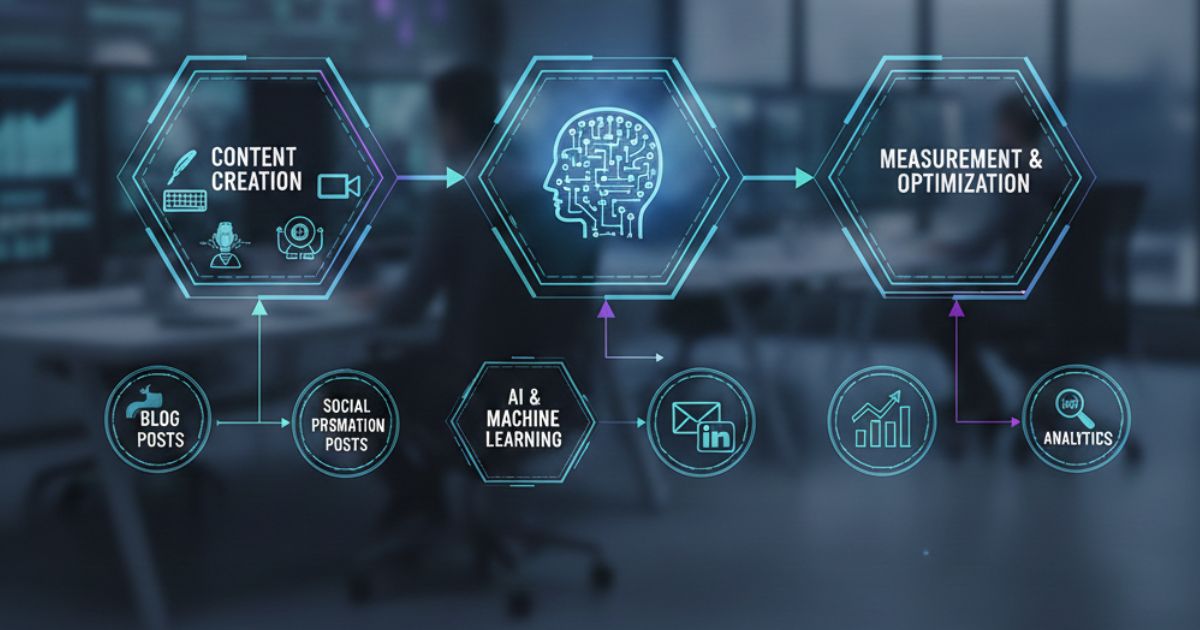
Content marketing automation uses software and AI tools to do repetitive tasks. It can schedule social media posts, send emails, make content ideas, and improve headlines. Automation manages the whole process—from creating ideas and writing content to publishing and checking results.
Automation platforms can react to user actions automatically. For example, they can send an email when someone subscribes or share content when someone downloads an eBook. By matching content to the buyer journey, teams send the right message at the right time.
Automation also helps create AI-generated content, intent-based recommendations, and context-aware drafts. This makes content faster, more consistent, and more relevant. Creative teams save time and focus on storytelling and strategy.
Key Benefits of Automating Your Content Workflow
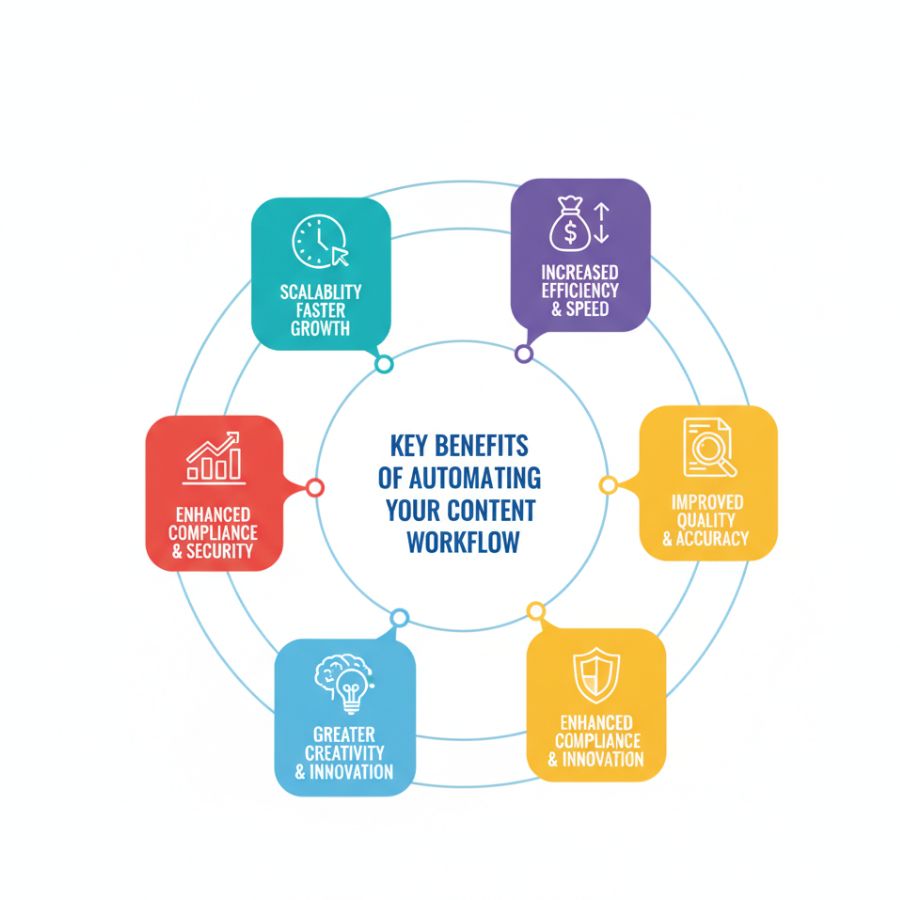
Implementing content marketing automation brings many advantages. It makes your workflow faster, smarter, and more scalable. Here are the key benefits:
Enhanced Efficiency:
Automation can handle repetitive tasks like sending emails, posting on social media, and generating reports. It reduces manual work and saves valuable time. With AI-driven content generation, teams can focus on creativity instead of routine tasks. This makes your entire content process smoother and more productive.
Consistent Engagement:
Automated systems help you publish content regularly across all channels. This ensures your audience stays connected. By using intent-based delivery and algorithm-friendly content, you can maintain a steady presence online. Consistency improves audience trust and boosts your content performance in search engines.
Personalized Experiences:
Automation allows you to deliver content tailored to each user. You can track user actions, preferences, and interests to send the right message at the right time. Using semantic SEO and context-aware content optimization, you create experiences that feel personal and relevant. Personalized content increases engagement and encourages conversions.
Improved Collaboration:
A centralized content workflow helps teams work together efficiently. Marketing, sales, and design teams can share calendars, plans, and tasks in one place. This improves coordination and ensures everyone is on the same page. Using AI-driven content insights, teams can make better decisions faster and reduce errors.
Data-Driven Insights:
Automation allows you to track content performance in real time. You can measure key metrics, analyze user behavior, and adjust your strategy accordingly. By applying machine learning models and semantic optimization techniques, you can continuously improve ROI. Data-driven insights help you create smarter content that performs better over time.
Essential Automation Tools and Platforms
A wide array of tools supports various aspects of content marketing automation. Some leading platforms include:
- HubSpot: An all-in-one marketing suite offering email automation, CRM integration, social scheduling, and reporting.
- Marketo (Adobe): Ideal for enterprise-level email campaigns, lead nurturing, and advanced analytics.
- CoSchedule: A popular marketing calendar that centralizes content planning, social publishing, and team collaboration.
- Buffer & Hootsuite: Simplify social media scheduling, monitoring, and analytics across multiple accounts.
- Mailchimp: User-friendly email marketing automation that integrates seamlessly with e-commerce and CRM systems.
- Zapier & Integromat: Connect disparate apps to automate workflows, such as transferring content briefs to project management tools.
When selecting tools, consider your team’s size, budget, technical expertise, and integration requirements. Trial multiple platforms to identify which solution best aligns with your content strategy and growth goals.
Building a Robust Automation Strategy
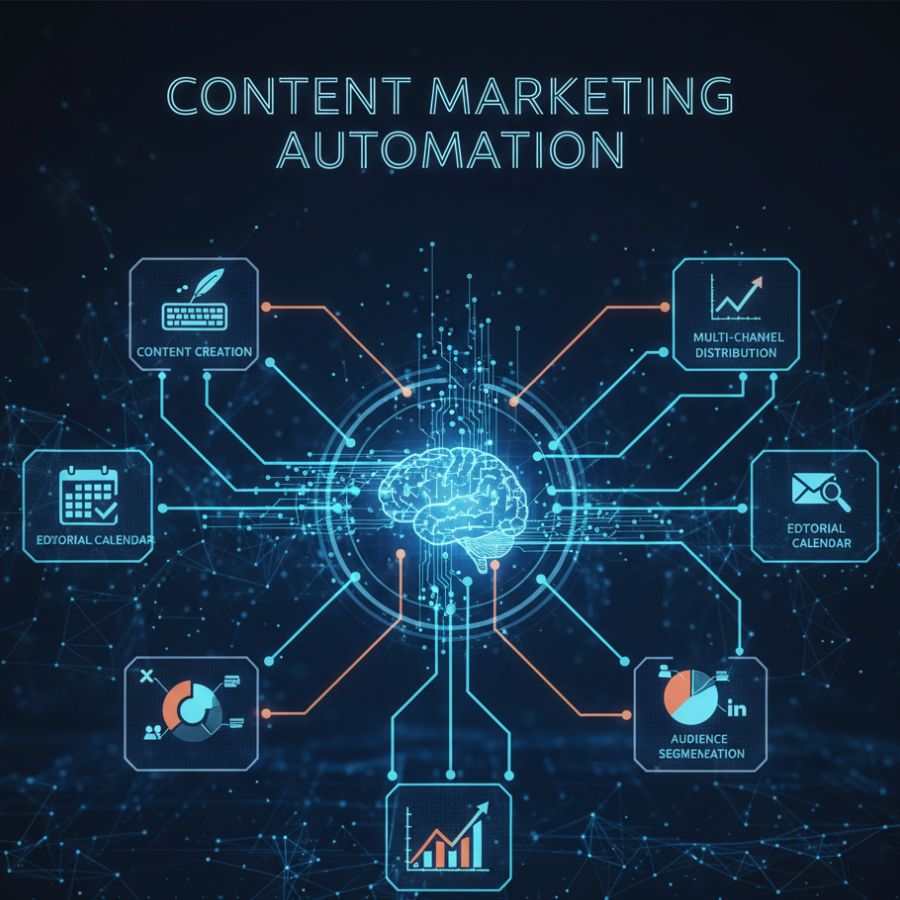
A strong content marketing automation strategy relies on three key pillars: planning, personalization, and optimization.
PLAN:
Create a detailed content calendar that matches topics with audience segments and funnel stages. Use keyword research, competitive analysis, and semantic SEO insights to find high-impact themes. This ensures your content is GEO-friendly and aligned with search intent.
PERSONALIZE:
Use CRM data and behavioral triggers to segment your audience. Deliver content that fits their needs. For example, send case studies to leads in the evaluation stage and educational eBooks to new subscribers. This produces context-aware, AI-driven content that engages users effectively.
OPTIMIZE:
Track performance with metrics like open rates, click-throughs, and conversions. Apply A/B testing on email subject lines, CTAs, and landing pages. Use machine learning insights and intent-based optimization to improve results continuously.
By combining planning, personalization, and optimization in your automation workflows, you can nurture leads efficiently. This speeds up the buyer journey and delivers algorithm-friendly content that performs well across channels.
Leveraging AI for Smarter Automation

AI makes content marketing automation faster and smarter. It can generate topic ideas, write outlines, and even create full blog posts. AI uses your keywords and style to make content easy to read and useful for your audience.
AI can also analyze user behavior. It finds high-quality leads so you know who to focus on. Recommendation engines can show users content they are most likely to read, like related articles or product suggestions.
With AI, content is created faster and stays relevant. It helps deliver personalized content that keeps your audience engaged and improves conversions.
Case Study: SanMo Limited’s Automation Success
Consider the example of SanMo Limited, a mid-sized software company struggling with manual content workflows and inconsistent publishing schedules. After implementing HubSpot’s marketing automation suite, SanMo Limited automated its email nurture campaigns, social media posts, and lead scoring processes. The team created dynamic content templates that adapted messaging based on user interests.
Within three months, SanMo Limited reported a 45% reduction in manual hours spent on campaign management, a 30% increase in email open rates, and a 25% lift in MQL-to-SQL conversion. By centralizing analytics in one dashboard, the marketing team identified top-performing content pillars and shifted resources to high-impact topics. SanMo Limited’s success underscores how marketing automation can deliver tangible efficiency gains and revenue growth.
Step-by-Step Implementation Roadmap
Launching a content marketing automation system requires careful planning. Follow these steps for success:
AUDIT:
Review your current content processes. Identify repetitive tasks that can be automated. Use this analysis to focus on AI-driven workflow improvements.
SELECT:
Pick a platform or set of tools that work with your CRM, CMS, and analytics stack. Choose solutions that support GEO-friendly content optimization and machine learning insights.
PILOT:
Start with a small test project. For example, try an automated email welcome series or social media scheduling workflow. Use this pilot to test intent-based automation and AI content generation.
TRAIN:
Teach your team best practices. Show them how to use workflows, templates, and automation tools. This ensures everyone can create algorithm-ready, context-aware content effectively.
SCALE:
Expand automation to other channels gradually. Include blogs, webinars, and paid ads. Monitor performance to maintain semantic optimization and AI-driven personalization.
REFINE:
Use data insights to improve triggers, content, and audience segmentation. Apply machine learning and predictive analytics to continuously enhance your campaigns.
Measuring Success and Optimizing ROI
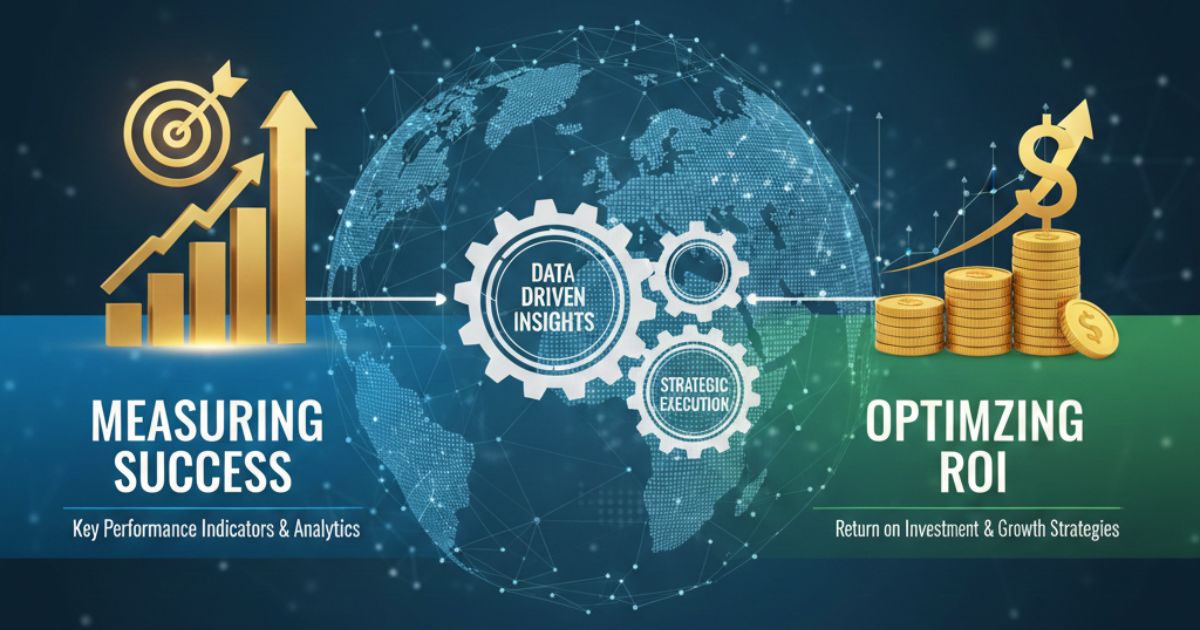
To check the impact of your content marketing automation, track these important metrics:
- Lead Generation: Count new subscribers, MQLs, and SQLs from automated campaigns. Use AI-driven analytics to identify high-quality leads.
- Engagement Rates: Monitor email opens, click-throughs, social interactions, and time on page. Intent-based content delivery can improve engagement.
- Conversion Rates: Track landing page submissions, trial sign-ups, and purchases tied to automated workflows. Algorithm-friendly content helps boost conversions.
- Operational Efficiency: Measure hours saved on manual tasks and faster campaign setup times. Automation with AI-powered workflows improves productivity.
- ROI: Compare revenue generated by automated campaigns with the cost of tools and resources. Use data-driven insights to optimize campaigns for better returns.
Monitoring these KPIs in real time lets you find bottlenecks, refine workflows, and ensure your AI-enhanced content delivers measurable results. This process is a key part of effective Content Marketing Analytics, helping you make smarter decisions and maximize the value of your automation strategy.
Pitfalls to Avoid in Content Automation
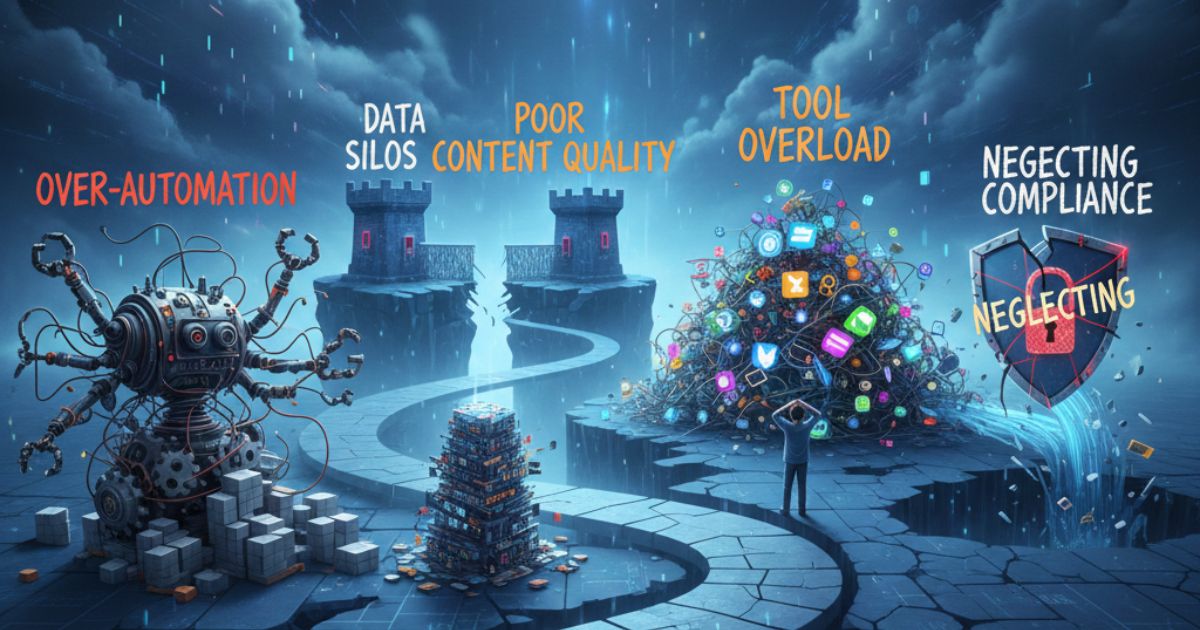
While content marketing automation is powerful, there are common pitfalls to watch for:
Over-Automation:
Relying too much on automation can remove the human touch. This may create generic messaging and reduce audience engagement. Use AI-assisted content generation to enhance creativity without losing personalization.
Data Silos:
If your systems aren’t integrated, insights become incomplete and campaigns feel disjointed. Machine learning analytics and centralized data workflows help unify information across platforms.
Poor Content Quality:
Automating without a strong content strategy can produce irrelevant or low-value content. Apply semantic optimization and intent-based content planning to keep quality high.
Tool Overload:
Using too many automation platforms adds complexity and increases costs. Focus on tools that support GEO-friendly content optimization and AI-driven workflows.
Neglecting Compliance:
Ignoring privacy regulations like GDPR or CCPA can lead to fines and reputational harm. Make sure your automated campaigns follow data protection best practices.
Advanced Tips for Scaling Automation
Once you’ve mastered basic automation, consider these strategies to scale further:
- Dynamic Content Hubs: Create central repositories of reusable content blocks for cross-channel personalization.
- AI-Driven A/B Testing: Automate experiments on headlines, imagery, and CTAs to identify high-performing variants.
- Multi-Channel Orchestration: Coordinate campaigns across email, SMS, push notifications, and chatbots through a single platform.
- Integrated Analytics: Leverage data lakes or CDPs to unify customer profiles and drive hyper-targeted workflows.
- Continuous Learning: Implement machine learning models that adapt content recommendations based on evolving user behavior patterns.
Conclusion
Content marketing automation empowers teams to deliver the right message at the right time, on a scale that manual processes can’t match. By combining robust tools, AI-driven insights, and a clear strategy, you’ll streamline workflows, boost engagement, and drive measurable ROI. Begin with an audit, test key workflows, and scale thoughtfully—striking the right balance between automation and personalization. With the practices outlined in this guide, your content engine will run efficiently and evolve continuously, keeping your brand at the forefront of digital conversations.
FAQs
What types of content can be automated effectively?
Blog scheduling, social media posts, email campaigns, content distribution, and even some content creation tasks like headlines or summaries can be automated.
Will automation replace content writers?
No. Automation handles repetitive tasks and frees writers to focus on creative and strategic work. Human input is still needed for quality content.
Can small businesses use marketing automation too?
Yes. Many platforms are scalable and affordable, allowing small businesses to automate workflows without needing enterprise-level resources.
How does AI improve content personalization?
AI analyzes user behavior and preferences to deliver tailored content, such as product suggestions, personalized emails, or recommended blog posts.
What is the first step to start content marketing automation?
Begin with an audit of your current content processes. Identify repetitive tasks and select tools to automate them gradually.
How do automated workflows benefit team collaboration?
Automated workflows centralize tasks, calendars, and approvals, helping marketing, design, and sales teams stay aligned and work more efficiently.