
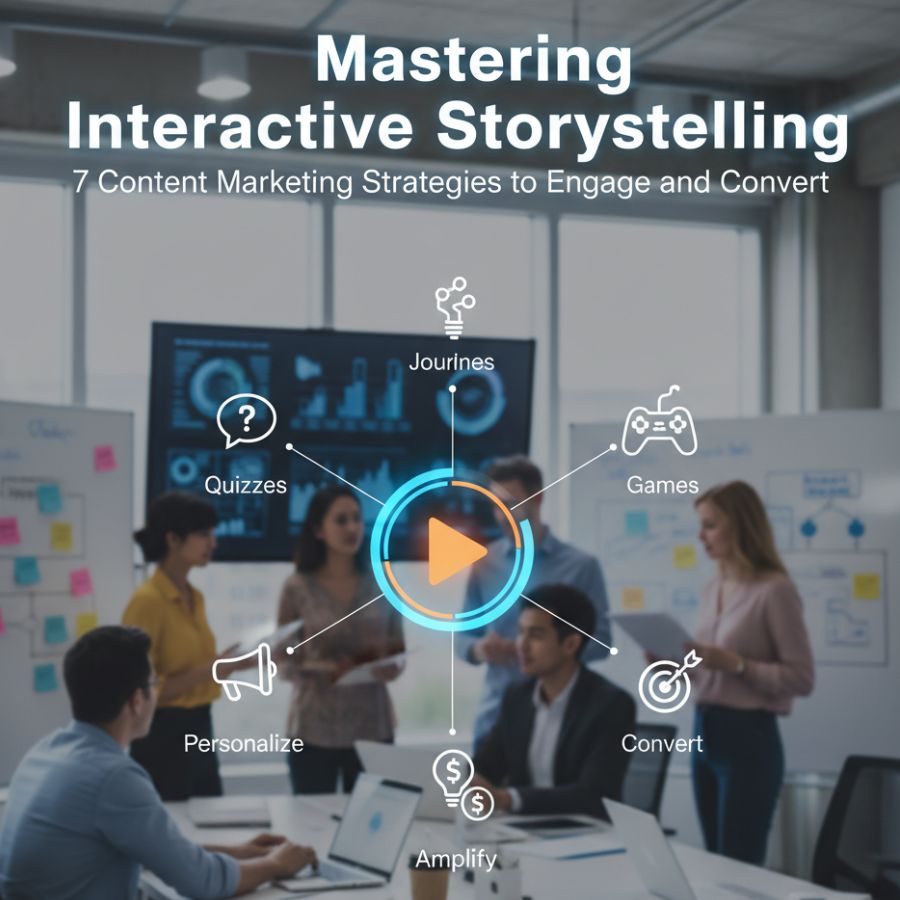
Storytelling in content marketing is changing fast. Static content often struggles to capture attention in today’s fast-moving digital world. People no longer want to only read or watch—they want to interact with content, explore different paths, and feel part of the experience. This shift is why interactive storytelling has become so powerful in modern marketing.
Interactive storytelling blends a strong brand narrative with active user participation. It turns passive readers into engaged users who click, choose, swipe, and explore at their own pace. This type of immersive content boosts important engagement metrics like time on page, click-through rates, and social shares. It also makes your message more memorable—similar to how platforms like Netflix, Spotify, and YouTube use personalization and interaction to keep audiences hooked.
Brands that embrace digital storytelling stand out in a crowded online space. Companies like Canva, HubSpot, and Webflow use interactive quizzes, demos, and guided experiences to attract users and build trust. These formats feel more human, more fun, and more useful—helping brands strengthen loyalty and increase conversions.
In this post, we will explore seven practical strategies to help you master interactive storytelling. You’ll learn how to create immersive experiences, engage your audience more effectively, and use simple but powerful techniques that improve results in engagement marketing.
Why Interactive Storytelling Matters?

Traditional blogs and whitepapers still have value, but they offer one-way communication. Modern audiences want more than information. They want interactive content that lets them click, choose, explore, and feel involved. This is why interactive storytelling in content marketing has become so important. When users can answer questions, view dynamic visuals, or select different story paths, the content becomes more meaningful and more memorable.
Research shows that immersive storytelling can generate almost twice as many conversions as passive content. Users also spend 47% more time on pages that include quizzes, sliders, animations, or branching story formats. Platforms like HubSpot, Canva, and Typeform use these features because they boost audience engagement and improve content experience.
Beyond numbers, interactive storytelling builds stronger emotional connections. It makes your brand feel more human. It encourages users to share your content, talk about it, and return for more. This leads to better brand loyalty, stronger trust, and more word-of-mouth referrals—key elements of successful engagement marketing.
1. Choose the Right Narrative Arc
Every strong story follows a simple structure: setup, conflict, climax, and resolution. Apply this arc to your interactive content to guide users smoothly. For example, an online quiz can start by identifying user pain points (setup), show choices or challenges (conflict), reveal insights or results (climax), and end with personalized recommendations (resolution). This structure makes your interactive story clear, engaging, and satisfying. Tools like Typeform and HubSpot make this easy to build.
2. Incorporate Multimedia Elements
Text alone is not enough in today’s short-attention world. Add images, videos, infographics, and simple animations to create immersive storytelling. You can also use 360° images, clickable graphics, or interactive charts that change based on user actions. Multimedia helps users understand better and enjoy the experience more. Make sure all files load fast, so users don’t drop off. Platforms like Canva and Figma help create visuals quickly.
3. Foster Audience Participation
Interactive storytelling works when users take action. Add polls, sliders, drag-and-drop games, and branching choices that change the story. For example, a decision-tree quiz can help marketers plan a campaign and get personalized tips based on their answers. This increases content engagement and helps you collect valuable first-party data about user interests and behavior.
4. Personalize the User Journey
Generic stories feel boring. Use conditional logic to create a dynamic audience experience. Show different story paths based on user choices, greet returning users, and recommend content that matches their industry or goals. Personalization makes users feel understood and increases the value of your digital storytelling strategy. This approach also connects well with new formats like Interactive Storytelling in VR, where personalized paths make the experience even more immersive. Always be clear about data usage and offer simple opt-in choices.
5. Leverage Data-Driven Insights
Interactive content produces strong data signals like clicks, time on page, popular choices, and drop-off points. Use tools such as Google Analytics or built-in analytics from interactive platforms to study this data. Identify where users stop, which choices they prefer, and what elements work best. Use A/B testing to improve your titles, visuals, and interactive widgets. Data helps you refine your storytelling and improve conversions.
6. Optimize for Mobile Experience
Most users now scroll on mobile. Your interactive content must work smoothly on smaller screens. Use responsive layouts, simple gestures, and touch-friendly elements. Test on different devices to ensure animations and interactions work well. A smooth mobile experience increases completion rates and keeps users engaged longer.
7. Measure and Iterate

No interactive campaign is perfect on the first try. Set clear KPIs like engagement time, conversions, and social shares. Ask users for quick feedback using short surveys or exit pop-ups. Then improve your story by adjusting copy, replacing visuals, improving CTAs, or adding new interactive steps. Continuous updates keep your interactive storytelling fresh, relevant, and effective.
Essential Tools and Platforms
You don’t need advanced coding skills to create interactive content. Many modern tools make it easy to design experiences that keep users engaged. These platforms support interactive storytelling, visual content creation, user engagement, and conversion-focused marketing.
1. Ceros
Ceros is a powerful no-code content creation platform. Brands use it to build interactive infographics, quizzes, landing pages, and immersive microsites. It’s great for marketers who want to create rich media without relying on developers.
2. Outgrow
Outgrow lets you build calculators, assessments, polls, and chatbots with simple drag-and-drop tools. It’s often used for lead generation, personalized experiences, and data-driven marketing. Brands like HubSpot and Salesforce use tools like these to boost conversions.
3. Genially
Genially helps you design interactive presentations, gamified training modules, and clickable images. It’s popular in digital marketing, education, and brand storytelling because it makes content more visual and dynamic.
4. Typeform
Typeform is known for its conversational surveys, quizzes, and forms. It’s ideal for collecting first-party data, improving customer experience, and increasing response rates with smooth, user-friendly flows.
5. VR/AR
Virtual and augmented reality tools such as Unity, Unreal Engine, and Adobe Aero help brands create deeply immersive storytelling experiences. With VR, users can step inside a virtual world and explore a story from a first-person perspective. AR lets you place digital elements into the real world, making product demos, tutorials, and brand experiences more interactive and memorable. These technologies are becoming popular for brands that want to deliver richer, more lifelike content experiences.
How to Choose the Right Platform?
Pick a tool based on your team’s skill set, content goals, and budget. Check if the platform integrates with your existing CRM, analytics tools, and marketing automation software (like HubSpot, Marketo, or Google Analytics). Before publishing, always test your interactive content internally to ensure smooth performance on desktop and mobile.
Case Studies
Study 1: CapitalEdge Finance
CapitalEdge Finance, a mid-sized financial services company, launched an interactive decision tree to guide small business owners through different loan options. Users answered a few simple questions and received personalized recommendations based on their needs.
Results:
- 65% of users submitted a lead form
- This was double their normal conversion rate from static forms
This example shows how interactive tools can improve lead generation, increase user engagement, and simplify complex financial decisions.
Study 2: FitLife Wellness
FitLife Wellness created an animated interactive quiz to recommend personalized fitness plans. The quiz used short questions, fun animations, and tailored results to keep users involved.
Results:
- Average engagement time: 6 minutes
- 80% increase in social shares compared to regular blog posts
FitLife’s success proves how personalized, interactive content boosts brand visibility, customer satisfaction, and social media engagement.
Best Practices Checklist
- Set clear goals and KPIs before creating your interactive content. This helps you measure success and stay aligned with your marketing strategy.
- Build a smooth narrative arc with logical branching paths. Make sure every choice feels natural and keeps the story moving.
- Use high-quality multimedia such as images, videos, and animations. Always optimize them for fast loading and better user experience.
- Focus on accessibility and mobile responsiveness. Your interactive content should work smoothly on all devices, including tablets and smartphones.
- Collect user data responsibly to understand behavior, improve engagement, and strengthen your storytelling strategy.
- Be transparent about data and privacy. Tell users how their information will be used and provide clear consent options.
Conclusion
Interactive storytelling in content marketing is a powerful way to engage your audience and build a memorable brand presence. When you let users take part in the story, they feel more connected to your message. This increases engagement, boosts time on page, and helps you gather useful first-party data. It also strengthens customer trust and long-term loyalty.
The seven strategies shared here can help any business turn static content into immersive experiences. By using clear narratives, multimedia elements, personalization, and mobile-friendly design, brands can create richer digital interactions. Follow these content marketing best practices, test different formats, and improve your approach over time. This will help increase conversion rates, improve audience interaction, and make your overall digital storytelling strategy more effective in today’s competitive landscape.
FAQs
What is interactive storytelling in content marketing?
Interactive storytelling in content marketing is a strategy where users actively participate in a story or content experience. It combines narrative with quizzes, polls, or interactive visuals to engage the audience, increase time on page, and drive conversions.
Why is interactive storytelling important for engagement?
Interactive storytelling boosts engagement because it transforms passive reading into active participation. Users are more likely to explore, comment, share, and remember content, which strengthens brand loyalty and improves key engagement metrics.
How can I personalize interactive storytelling for my audience?
You can personalize interactive storytelling by using conditional logic, dynamic content, and user-specific recommendations. For example, greet returning visitors by name, adjust story paths based on past interactions, or show case studies relevant to the user’s industry.
What tools can help create interactive storytelling content?
Popular tools include Ceros for interactive infographics, Outgrow for calculators and assessments, Genially for gamified presentations, and Typeform for quizzes and surveys. These tools let you create immersive experiences without heavy coding.
How do I measure the success of interactive storytelling?
Track metrics like engagement rate, time on page, click-through rates, completion rates, and lead conversions. Use analytics tools to analyze user behavior, test different story variations, and continuously optimize for better results.