
The fast-paced digital marketing landscape has pushed brands to leverage artificial intelligence (AI) for smarter, more engaging content creation. AI-First Content Strategies have become essential for businesses aiming to outperform competitors in 2026. By integrating AI-powered tools such as predictive analytics, natural language processing (NLP), and content optimization platforms throughout the content lifecycle—from ideation and audience research to creation and distribution—brands can deliver personalized content experiences, boost engagement metrics, and achieve measurable marketing results.
This comprehensive guide explores AI-First Content Strategies, why they are crucial, and how AI-driven content and automation tools for marketing can be implemented to drive success in 2026.
What Are AI-First Content Strategies?
AI-First Content Strategies refer to a content marketing approach where artificial intelligence is the central driver of planning, creation, optimization, and distribution. Unlike traditional content strategies that rely heavily on human intuition, AI-First approaches leverage AI-driven content, predictive analytics, automation tools for marketing, and AI-powered insights to guide content decisions.
By putting AI at the center, brands can:
- Identify trending topics and audience interests more accurately using AI-powered research tools.
- Optimize content for search engines and user engagement in real time through content optimization tools.
- Personalize content at scale, delivering the right message to the right audience with dynamic content personalization.
- Reduce time spent on repetitive tasks, freeing up creative teams for higher-value work and enhancing digital marketing efficiency.
In 2026, AI-First Content Strategies will not only improve efficiency but also drive innovation in how brands communicate with their audiences, leveraging AI tools for brands to create smarter, more engaging campaigns. These strategies are increasingly powered by Content Marketing Automation, enabling seamless workflow management and consistent, high-quality content delivery.
Why Brands Need AI-First Content Strategies in 2026?
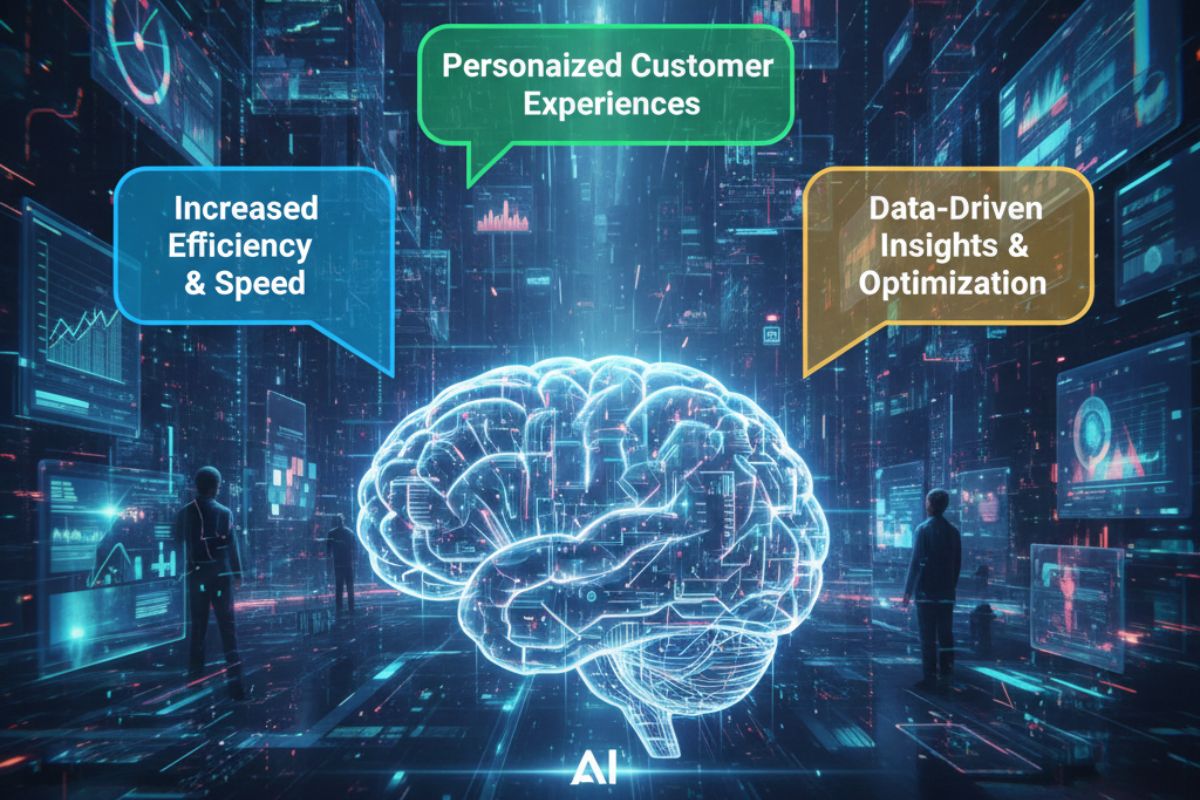
The digital world is more crowded than ever. Every brand is creating content, running ads, and competing for the same audience. This makes it difficult to grab attention and maintain visibility. An AI-First Content Strategy helps brands stay relevant, competitive, and efficient by using AI-driven marketing and automation to improve every part of the content process.
1. Enhanced Personalization at Scale
Modern customers expect personalized content. They want information that matches their interests, behavior, and intent.
AI makes personalization simple through customer behavior analysis and predictive recommendations.
AI helps brands:
- Deliver personalization at scale
- Show relevant articles, videos, and product guides
- Recommend content based on past interactions
- Improve user experience with tailored messaging
When content becomes more accurate and relevant, engagement increases and conversions rise.
2. Strong Data-Driven Insights and Real-Time Analytics
AI can analyze large data sets instantly. This gives brands real-time insights that support better decisions. Instead of relying on guesswork, brands can use predictive analytics to understand what audiences want.
AI helps brands:
- Identify high-performing content
- Track audience sentiment
- Discover trending topics
- Find content gaps and new opportunities
- Improve content optimization strategies
With these insights, every piece of content becomes more strategic and aligned with audience needs.
3. Faster and More Efficient Content Production
Content creation takes a lot of time. AI makes the process faster through content automation and smart writing tools.
AI tools can:
- Generate content ideas
- Assist in writing blogs, scripts, and captions
- Suggest secondary keywords and LSI terms
- Automate social media scheduling
- Improve clarity, grammar, and brand voice
- Boost content consistency
This allows brands to publish more content without overworking their teams.
4. Strong Competitive Advantage in a Saturated Market
Brands that use AI-first approaches become more competitive. AI helps them react quickly to changes, optimize performance, and stay ahead in a crowded digital ecosystem.
AI enables brands to:
- Predict market trends
- Adjust campaigns in real time
- Understand shifting audience interests
- Improve digital competitiveness
- Build smarter long-term strategies
Early adopters gain a clear advantage over competitors who still use traditional content methods.
Key Components of AI-First Content Strategies
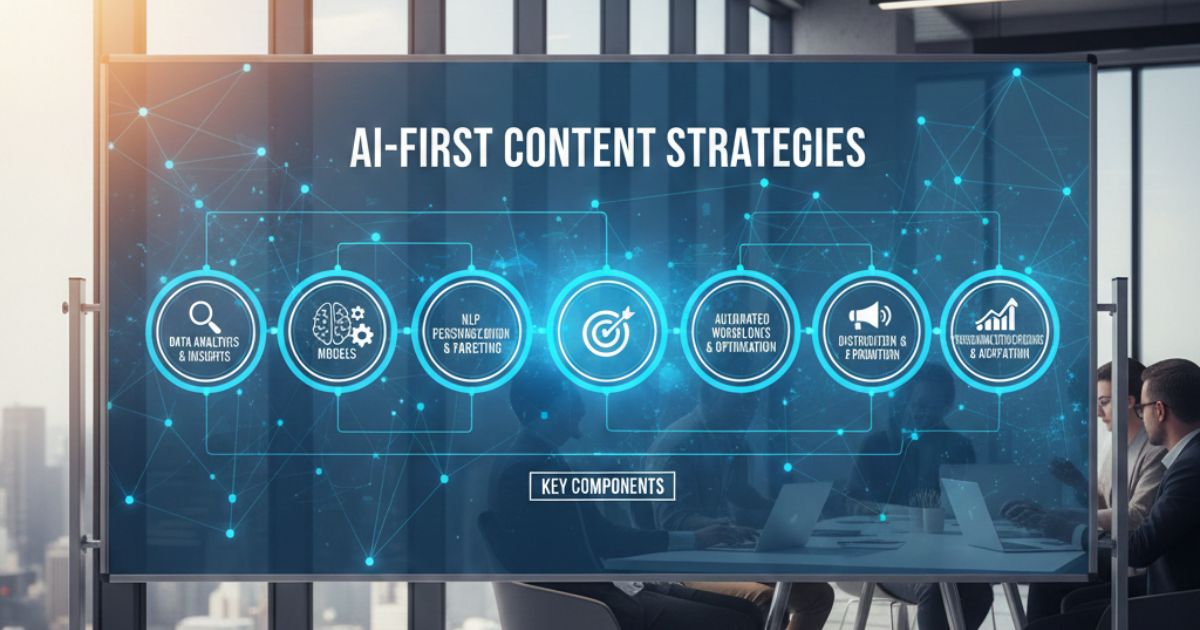
Implementing AI-First Content Strategies requires a structured approach that integrates AI across all stages of content marketing. Here are the core components:
1. AI-Powered Content Research
AI tools can analyze search trends, social media conversations, and competitor content to identify topics that resonate with your audience. Natural Language Processing (NLP) algorithms can even detect emerging patterns in consumer interests, enabling brands to stay ahead of the curve.
Tools to consider: MarketMuse, Clearscope, BuzzSumo
2. AI-Driven Content Creation
AI content generators can produce drafts, outlines, or even fully developed articles, saving time and providing inspiration for human writers. The goal is not to replace creativity but to enhance it with AI insights.
For instance, AI can suggest headlines, subheadings, and relevant keywords that improve SEO performance while maintaining readability.
3. Content Optimization and SEO
AI tools can automatically analyze content for SEO performance, readability, and engagement metrics. They provide recommendations for improving keyword placement, meta descriptions, and internal linking structures.
By leveraging AI for SEO, brands can ensure that their content ranks higher on search engines while providing valuable information to users.
4. Personalized Content Distribution
AI enables intelligent content distribution across multiple channels. By analyzing user behavior and engagement data, AI can determine the best time, format, and platform for each piece of content.
For example, AI can recommend sending an email newsletter to one audience segment while promoting a video on social media to another, maximizing reach and engagement.
5. Analytics and Continuous Improvement
AI tools continuously monitor content performance, allowing brands to adjust strategies in real time. Predictive analytics can forecast trends, helping marketers proactively create content that meets future demand.
By leveraging AI-driven analytics, brands can achieve continuous improvement, ensuring their content strategy evolves with audience preferences.
Implementing AI-First Content Strategies: Step-by-Step Guide
Implementing AI-First Content Strategies in 2026 requires careful planning and execution. Here’s a practical roadmap:
Step 1: Define Goals and KPIs
Before adopting AI, brands must clearly define their content marketing objectives. Are you aiming to increase website traffic, improve engagement, or drive sales?
Once goals are defined, set measurable KPIs such as click-through rates, time on page, or lead generation metrics.
Step 2: Choose the Right AI Tools
Not all AI tools are created equal. Select solutions that align with your goals, budget, and technical capabilities. Common AI categories include:
- Content generation and writing assistants
- SEO and keyword optimization tools
- Social media and email marketing automation
- Analytics and predictive insights platforms
Step 3: Integrate AI Into Workflow
AI works best when integrated into existing workflows. Encourage teams to use AI for research, drafting, editing, and distribution while maintaining human oversight for creativity and brand voice.
Step 4: Train Teams and Encourage Collaboration
AI adoption is not just about tools—it’s about people. Provide training and resources to help teams understand AI capabilities and limitations. Encourage collaboration between human experts and AI to produce high-quality content.
Step 5: Measure, Optimize, and Iterate
Regularly review content performance using AI-driven analytics. Identify what works, what doesn’t, and optimize accordingly. The most successful AI-First Content Strategies are iterative, constantly evolving based on data and insights.
Emerging Trends in AI-First Content Strategies for 2026
AI is evolving very fast, and several new trends are reshaping how brands create and deliver content. As we move deeper into 2026, AI-first strategies are becoming smarter, more personalized, and more predictive. These trends show how AI will continue to transform digital marketing, content creation, and audience engagement.
1. Generative AI for Multimedia Content
Generative AI is no longer limited to text-based content.
Brands are now using AI to create videos, graphics, animations, and interactive experiences.
This includes:
- AI-generated short-form videos
- Automated graphic design
- Personalized video ads
- Interactive product explainers
- AI-driven multimedia storytelling
This trend helps brands engage audiences on multiple platforms and deliver richer visual content with less production time.
2. Hyper-Personalization and Intent-Based Targeting
Personalization is getting deeper and more advanced.
AI can now tailor content using psychographics, browsing patterns, purchase behavior, and real-time context.
With hyper-personalization, brands can:
- Show content based on user intent
- Deliver recommendations instantly
- Adapt content to individual moods or preferences
- Create dynamic user journeys
- Improve engagement with AI-driven personalization engines
This level of personalization helps brands connect with audiences on a more emotional and meaningful level.
3. Growth of Voice and Conversational AI
Smart speakers, virtual assistants, and chatbots are becoming more common.
This shift is pushing brands to optimize for voice search, natural language queries, and conversational content.
Trends include:
- Voice-optimized blog content
- Conversational landing pages
- AI-powered customer service bots
- Interactive storytelling
- Natural language–focused SEO
Brands that adopt conversational AI will offer smoother and more intuitive user experiences.
4. Predictive Content Marketing and Trend Forecasting
AI is becoming more proactive.
Instead of reacting to trends, brands can now use predictive analytics to identify what audiences will want next.
AI helps brands:
- Predict emerging topics before they trend
- Identify seasonal content opportunities
- Understand future customer needs
- Plan campaigns with better accuracy
- Create proactive, not reactive, content strategies
Predictive content marketing gives brands a major competitive advantage in fast-moving digital spaces.
Challenges to Consider When Using AI-First Content Strategies
AI-First Content Strategies offer many benefits, but brands must also deal with a few important challenges. Understanding these challenges helps brands use AI responsibly and maintain high-quality content. The goal is to combine AI-powered tools with human creativity, while staying ethical and compliant.
1. Ethical Use of AI
Brands must ensure that AI-generated content follows ethical standards.
Content created with AI should be transparent, factual, and aligned with brand values.
Key points:
- Avoid misleading or incorrect information
- Ensure the AI model uses accurate data sources
- Maintain honesty in automated messaging
- Keep human oversight in all AI-driven processes
Ethical content builds trust and protects brand reputation.
2. Maintaining Human Creativity
AI is powerful, but it cannot replace human imagination.
Brands should use AI to support creativity, not replace it.
AI helps with:
- Idea generation
- Content outlines
- Optimization suggestions
But human creators add:
- Emotional depth
- Original ideas
- Storytelling
- Brand personality
The best results come from combining human creativity with AI-driven efficiency.
3. Ensuring Data Privacy and Compliance
AI tools analyze customer data to deliver personalization.
This requires strict data privacy and regulatory compliance.
Brands must:
- Follow global and local privacy laws
- Use secure data collection methods
- Get user consent when needed
- Avoid storing unnecessary personal information
Responsible data use protects users and strengthens customer trust.
4. Quality Control and Content Accuracy
AI can generate content quickly, but human review is still essential.
Brands must ensure the output meets quality standards and matches brand identity.
Quality control includes:
- Checking tone and style
- Verifying facts
- Ensuring brand consistency
- Removing errors or repetitive content
Regular human editing keeps AI-generated content clear, accurate, and professional.
Conclusion
AI-First Content Strategies are transforming the way brands plan, create, and distribute content in today’s digital marketing landscape. By leveraging AI-driven content tools at every stage of the content lifecycle, businesses can deliver personalized content, optimize campaigns through content optimization, and gain a competitive edge in 2026. Integrating data-driven content marketing ensures decisions are guided by audience insights, engagement metrics, and predictive analytics, allowing brands to respond quickly to trends.
To stay ahead, companies must combine AI tools for brands with human creativity, continuously measure performance, and refine their digital marketing strategies. Brands that adopt AI-First Content Strategies today will become leaders in the next generation of content-driven marketing.
FAQ
1. What are AI-First Content Strategies?
AI-First Content Strategies are approaches to content marketing where AI drives key processes such as research, creation, optimization, and distribution, enhancing efficiency, personalization, and engagement.
2. Why should brands adopt AI-First Content Strategies in 2026?
Adopting AI-First Content Strategies allows brands to stay competitive by delivering personalized experiences, predicting trends, optimizing content performance, and improving overall efficiency.
3. Can AI replace human content creators?
No. AI complements human creativity by handling repetitive tasks and providing data-driven insights, but human oversight is essential to maintain quality, tone, and originality.
4. What types of content can AI create?
AI can generate written content, social media posts, email campaigns, videos, graphics, and interactive content, supporting a wide range of content marketing needs.
5. How can brands measure the success of AI-First Content Strategies?
Brands can track KPIs such as engagement rates, website traffic, conversions, and ROI using AI-driven analytics platforms to continuously optimize their content strategy.