
Visual Marketing has become an important part of how businesses communicate with modern audiences. Customers encounter images, videos, graphics, illustrations, product visuals, and branded designs across websites, social media platforms, advertisements, and digital channels every day. Because people often process visual information quickly, a consistent and meaningful visual presence can help businesses communicate their identity more effectively.
Trust is especially important in competitive digital markets. Before purchasing a product or service, customers often look for signals that a business is professional, reliable, and authentic. Consistent colors, typography, imagery, photography, video content, and design elements can create a recognizable identity that makes a brand easier to remember.
What Is Visual Marketing?
Visual Marketing is the use of visual elements to communicate a brand’s message, promote products or services, and connect with an audience. It can include photographs, videos, infographics, illustrations, graphics, animations, presentations, social media posts, product demonstrations, and branded website elements.
Unlike text-only communication, visual content can communicate information through design, composition, movement, and imagery. A product photograph can demonstrate appearance, while an infographic can simplify complex information. A short video can combine storytelling, sound, movement, and visual identity into one experience.
Why Visual Communication Matters
Visual communication can make information easier to understand and remember. A well-designed graphic may summarize information that would otherwise require several paragraphs of explanation.
Consistency is equally important. When similar colors, fonts, imagery, layouts, and design principles appear across marketing channels, audiences can more easily recognize the brand. Over time, repeated exposure to consistent visual elements can contribute to stronger brand recognition.
How Visual Marketing Builds Customer Trust
 Trust develops when customers repeatedly experience clear, consistent, and credible communication. Visual elements can contribute to this process by creating professional presentation and helping customers understand what a business offers.
For example, a company that uses high-quality product photography, clear service graphics, authentic customer images, and consistent website design may create a more organized experience. Customers can more easily understand the brand and identify its content across different platforms.
However, visual quality should support authenticity rather than create unrealistic expectations. Businesses should ensure that product images, demonstrations, testimonials, and promotional visuals accurately represent what customers can expect.
Creating a Professional Brand Identity
A professional visual identity gives customers consistent signals about a business. Logos, colors, typography, photography styles, icons, and layouts can work together to create a recognizable brand system.
Consistency does not mean every piece of content must look identical. Instead, businesses should establish design principles that allow different content formats to maintain a common identity. This approach can make websites, social media posts, advertisements, packaging, and other communication materials feel connected.
Using Authentic Visual Content
Authenticity can strengthen trust when customers can see realistic representations of products, services, people, and experiences. Businesses can use behind-the-scenes photography, employee content, customer stories, demonstrations, tutorials, and real product images to make communication more relatable.
Stock imagery can still be useful, but excessive reliance on generic images may make a brand appear less distinctive. Original visuals can communicate personality and provide customers with a clearer understanding of the business.
The Role of Brand Storytelling in Visual Marketing
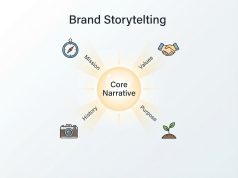
Brand Storytelling uses narratives to communicate a company’s identity, values, purpose, experiences, or customer-focused mission. Visual elements can make these stories easier to understand and emotionally engaging.
A brand story does not have to be complicated. A short video showing how a product is created, a series of images featuring employees, or a customer success story can communicate meaningful information. The important factor is consistency between the story, visual presentation, and actual brand experience.
Connecting Visuals With Brand Values
Visual content should reflect what a brand wants customers to associate with it. A company focused on sustainability might use visuals that highlight responsible materials, production processes, or environmental initiatives. A technology company might emphasize innovation through product demonstrations and interface visuals.
The goal is to connect visual choices with real business values. When visuals make claims that are not supported by the actual customer experience, they may create confusion rather than trust.
Telling Customer-Centered Stories
Customer-centered visual storytelling focuses on how a product or service affects real people. Instead of only presenting product features, businesses can demonstrate practical applications, challenges, solutions, and outcomes.
For example, an educational company could use learner stories to demonstrate how its programs support skill development. A fitness business could show realistic training journeys rather than relying only on polished promotional images. These stories can make marketing messages more relatable.
How Visual Marketing Strengthens Brand Recognition
 Brand recognition means customers can identify a business through recognizable brand elements. Visual consistency can support this process by repeatedly presenting similar colors, typography, logos, imagery, and design patterns.
When customers encounter familiar visual elements across different channels, they may recognize the brand without immediately reading the company name. This can be particularly useful in crowded social media feeds where businesses compete for attention.
Maintaining Consistent Visual Elements
Businesses should create clear visual guidelines covering important design elements. These guidelines may include primary and secondary colors, typography, logo usage, image styles, graphic layouts, icon styles, and video presentation.
Consistency should extend across websites, social media profiles, advertisements, email campaigns, presentations, and other customer-facing materials. A consistent identity helps create a connected customer experience.
Building Recognition Across Digital Channels
Customers rarely interact with a brand through only one platform. They may discover a business through social media, visit its website, watch a video, read a blog, and later encounter an advertisement.
Using recognizable visual elements across these touchpoints can create continuity. Even when the content format changes, the underlying visual identity can help customers understand that the communication comes from the same organization.
Creative Advertising and Visual Marketing
Creative Advertising uses original concepts, compelling visuals, storytelling, and distinctive messaging to capture attention and communicate a marketing message. Visual marketing is often central to creative advertising because images and videos can quickly demonstrate a product, communicate an idea, or establish an emotional tone.
Effective creative advertising should still have a clear purpose. Creativity should help the audience understand the message rather than distract from it. A visually impressive campaign may attract attention, but the audience should also understand the product, service, or action being promoted.
Creating Memorable Advertising Campaigns
Memorable campaigns often combine a recognizable visual concept with a simple and relevant message. Businesses can use distinctive photography, illustrations, animation, video storytelling, or creative layouts to differentiate their campaigns.
A consistent campaign theme can also help audiences recognize related advertisements across multiple platforms. Repetition of a recognizable visual concept can strengthen campaign recall while maintaining brand consistency.
Using Video for Better Communication
Video combines visuals, movement, sound, and narration, making it a versatile marketing format. Businesses can use videos for product demonstrations, tutorials, customer stories, interviews, educational content, event coverage, and promotional campaigns.
Short-form videos can work well for social platforms, while longer videos may be appropriate for tutorials, webinars, product explanations, or educational resources. The ideal length and format depend on audience expectations and the purpose of the content.
Creative Marketing Strategies for Stronger Visual Engagement
Businesses can develop Creative Marketing Strategies that use different visual formats throughout the customer journey. Instead of relying exclusively on promotional graphics, marketers can combine educational visuals, storytelling content, interactive formats, product demonstrations, and community-focused content.
A diverse visual strategy can keep communication fresh while maintaining a recognizable brand identity. Marketers should select formats according to customer needs and platform behavior rather than creating visual content simply for variety.
Using Infographics and Educational Graphics
Infographics can simplify complex information by combining text, icons, illustrations, charts, and visual hierarchy. They can be particularly useful for educational industries, technology companies, financial services, healthcare information, and data-driven businesses.
An effective infographic should have a clear structure and avoid unnecessary visual complexity. Important information should be easy to identify, while supporting elements should guide the reader through the topic.
Creating Interactive Visual Experiences
Interactive content can encourage users to actively engage with a brand. Examples include quizzes, calculators, interactive product demonstrations, polls, visual configurators, and clickable educational content.
These formats can make digital experiences more engaging because users participate rather than simply consume information. Businesses should ensure that interactive features have a clear purpose and remain easy to use across relevant devices.
Visual Marketing Across Social Media
Social media platforms are highly visual environments where businesses can communicate through images, videos, carousels, stories, reels, livestreams, and other formats. A consistent visual identity can make a company’s social content easier to recognize.
Each platform has different audience expectations and content formats. Businesses should adapt their visuals to each channel while maintaining core brand elements. This balance allows content to feel native to the platform without losing brand identity.
Designing for Mobile Audiences
Many social media users consume content on mobile devices. Visual content should therefore be easy to understand on smaller screens. Text within graphics should remain readable, important elements should not be overcrowded, and videos should communicate their central idea quickly.
Vertical formats may be appropriate for certain mobile-first platforms, while landscape visuals can work better in other contexts. Understanding platform specifications and audience behavior can improve the presentation of visual content.
Measuring Visual Marketing Performance
Visual marketing should be measured using metrics that correspond with specific business goals. Depending on the campaign, marketers may evaluate engagement, reach, impressions, video views, click-through rates, website traffic, conversions, and other relevant indicators.
Brand recognition can be more difficult to measure than immediate clicks or sales. Surveys, branded search trends, direct traffic patterns, social mentions, and customer research can provide additional insights into how audiences recognize and remember a business.
Improving Visual Content With Data
Performance data can reveal which visual formats attract attention and encourage action. If certain videos consistently generate stronger engagement, marketers can investigate what elements make them effective.
Businesses should avoid judging content solely by surface-level metrics. A post with many views may not generate meaningful business results, while an educational graphic with fewer views may attract highly relevant visitors. Performance should therefore be evaluated according to the original marketing objective.
Common Visual Marketing Mistakes
One common mistake is inconsistency. When every social post uses completely different colors, typography, imagery, and design styles, customers may struggle to recognize the brand.
Another problem is prioritizing appearance over communication. Visual content should make information clearer rather than simply look attractive. Overloaded graphics, tiny text, poor contrast, unrelated stock images, and excessive animation can reduce usability.
Businesses should also avoid copying competitors too closely. A distinctive visual identity can help a brand establish its own presence and reduce confusion within crowded markets.
Best Practices for Building Trust Through Visual Marketing
 Businesses should begin by defining a clear visual identity and documenting consistent design guidelines. Every visual asset should support the brand’s personality and communicate information accurately.
Authenticity should remain a priority. Original photography, realistic demonstrations, customer experiences, and transparent communication can help audiences develop more informed expectations.
Conclusion
Visual Marketing can play an important role in building customer trust and strengthening brand recognition. Consistent visual identities help customers recognize businesses across different digital channels, while authentic images, videos, graphics, and stories can make brand communication more understandable and relatable.
The strongest visual strategies connect design with genuine business values and customer needs. Brand Storytelling can give visual content meaning, while Creative Advertising can help campaigns capture attention. At the same time, Creative Marketing Strategies can provide a structured approach to using different visual formats throughout the customer journey.
Frequently Asked Questions
1. What is Visual Marketing?
Visual Marketing is the use of images, videos, graphics, illustrations, animations, and other visual elements to communicate a brand’s message, promote products or services, and engage target audiences.
2. How does Visual Marketing build trust?
Visual Marketing can build trust by presenting consistent, authentic, professional, and accurate information. Real product images, demonstrations, customer stories, and consistent brand design can help customers develop clearer expectations.
3. How does Visual Marketing improve brand recognition?
Consistent use of colors, typography, imagery, logos, layouts, and other visual elements can make a brand easier to identify across websites, social media, advertisements, email campaigns, and other marketing channels.
4. What is the role of Brand Storytelling in Visual Marketing?
Brand Storytelling gives visual content a narrative and purpose. Images, videos, and other creative formats can communicate a company’s values, customer experiences, history, or mission in a way that is easier for audiences to understand.
5. What is Creative Advertising?
Creative Advertising uses distinctive ideas, visuals, storytelling, and messaging to attract audience attention and communicate a promotional message. Visual elements are often an important part of these campaigns.
6. What are Creative Marketing Strategies?
Creative Marketing Strategies are approaches that use original ideas and different marketing formats to communicate with audiences and achieve business objectives. They can include visual storytelling, video campaigns, interactive content, and educational graphics.
7. Is video important for Visual Marketing?
Yes. Video can combine imagery, movement, sound, narration, and storytelling. Businesses can use it for product demonstrations, tutorials, customer stories, educational content, interviews, and promotional campaigns.
8. How can small businesses use Visual Marketing?
Small businesses can use branded social media graphics, original product photography, short videos, educational visuals, customer stories, and consistent website design. A clear visual identity can help create recognition without requiring a large marketing budget.
9. How can businesses measure Visual Marketing?
Businesses can measure visual marketing through relevant metrics such as engagement, reach, impressions, video views, click-through rates, website traffic, conversions, and brand recognition research. The appropriate metrics depend on campaign objectives.
10. What makes Visual Marketing effective?
Effective Visual Marketing combines consistent branding, authentic content, clear communication, audience relevance, accessible design, and measurable objectives. The visual element should support the marketing message rather than distract from it.