

Attention is the most valuable asset for any brand in the digital world. To stand out, businesses need more than just creativity — they need a data-driven content marketing strategy. By using analytics and real-time audience insights, marketers can transform raw data into engaging stories and content that resonates with the right people.
From content strategy and keyword research to publishing cadence and distribution channels, each step becomes smarter and more effective when it is guided by data. This data-driven approach helps brands increase engagement, measure ROI, and build stronger, long-term relationships with their audience.
In this post, we will explore the core principles, essential metrics, and powerful tools that make a content marketing strategy based on data successful. You’ll learn how to use analytics, content performance metrics, user behavior data, and SEO insights to shape content that not only reaches—but connects and converts.
With the right methods and insights, your brand can unlock real growth, deeper engagement, and measurable impact.
Defining Data-Driven Content Marketing
Data-driven content marketing means using data, analytics, and audience insights at every stage of the content process. Instead of relying on guesswork, marketers study user behavior, search intent, content performance metrics, SEO trends, and conversion data to guide decisions. Modern content marketing tools make this easier by providing real-time insights into what your audience wants and how your content is performing.
This approach helps teams create content that solves real audience problems and supports clear business goals. Every blog post, social update, video, or email is backed by data, not assumptions. By tracking performance in real time—such as engagement, click-through rates, retention, and user journeys—marketers can improve their messaging and targeting.
Data-driven marketing also encourages continuous optimization. Teams review what works, fix what doesn’t, and scale high-performing content. This leads to better results, stronger audience connections, and more predictable growth over time.
The Role of Customer Insights
Customer insights are the foundation of effective content marketing. These insights come from first-party data—such as website analytics, CRM activity, and email engagement—and third-party data, including industry reports, competitive benchmarks, and social listening insights. By understanding who your audience is, what challenges they face, and which channels they rely on, you can create content that feels relevant and valuable.
Audience segmentation makes this process even stronger. When you segment users based on demographics, behavior patterns, or buyer intent, you can deliver personalized content experiences that increase relevance, boost click-through rates, and improve overall brand loyalty. Deeper insights also help you align content with search intent, customer behavior, and user expectations.
By using data to guide decisions, you ensure each piece of content resonates, builds trust, and supports long-term content strategy success.
Benefits of a Data-Driven Approach
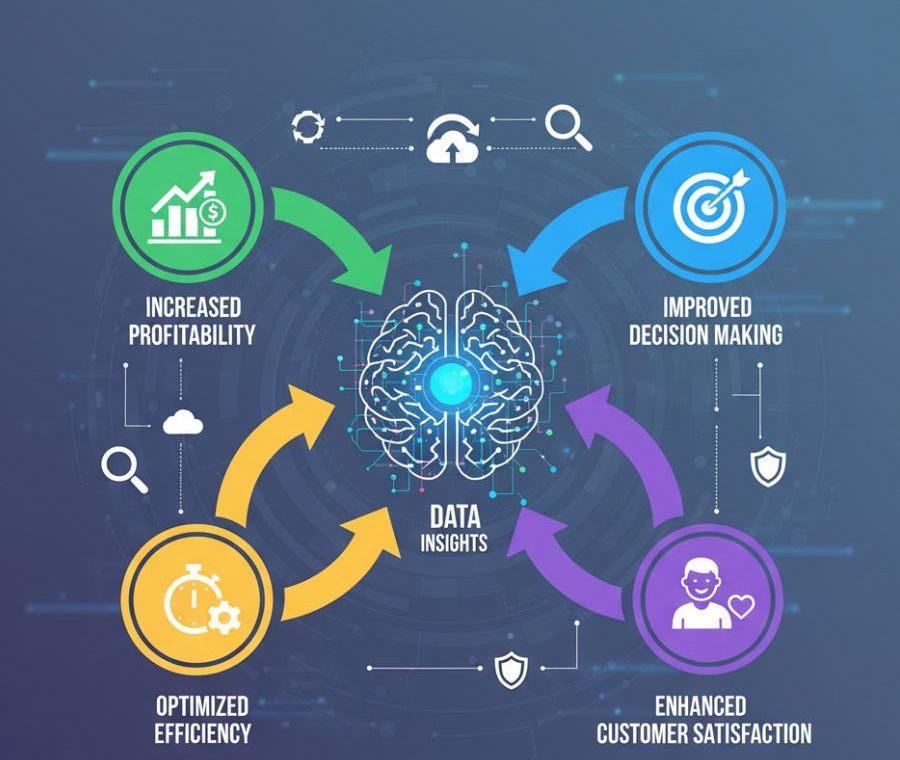
Adopting a data-driven content strategy offers multiple powerful advantages. First, it reduces uncertainty by providing clear, actionable evidence of what’s working—and what isn’t—so teams can allocate resources more effectively. With insights from audience analytics, behavioral data, and content performance metrics, marketers can make smarter decisions instead of relying on assumptions.
Second, it boosts audience engagement by delivering content that aligns closely with user preferences, search intent, and real-time needs. When you understand what topics, formats, and channels your audience responds to, you naturally create more impactful content.
Third, it improves conversion rates by identifying and optimizing key touchpoints in the buyer’s journey, helping you turn readers into leads—and leads into customers. Data highlights where prospects drop off, what motivates them, and which experiences drive the highest ROI.
Finally, a data-driven approach strengthens cross-functional collaboration. Insights from content performance can guide product development, support sales enablement, and enhance customer experience strategies. This creates a unified, growth-focused organization powered by shared data and aligned goals.
Essential Metrics to Track
To measure the success of your data-driven content marketing strategy, you must track both engagement metrics and outcome metrics. Engagement metrics show how users interact with your content. These include page views, average time on page, bounce rate, social shares, and scroll depth. Each metric helps you understand whether your content is relevant and valuable to your audience.
Outcome metrics focus on the actual business results. These include lead generation, email sign-ups, demo requests, and sales driven by content. These metrics reveal how well your content supports your conversion goals.
Skilled marketers also use advanced Content Marketing Analytics to track deeper performance indicators. These may include customer lifetime value (CLV), return on content investment (ROCI), multi-touch attribution, and content-assisted conversions. These insights help you understand how each piece of content influences revenue, supports the buyer journey, and drives long-term business growth.
Advanced Analytics Tools
Qualitative vs. Quantitative Data
While quantitative data provides the “what” and “when,” qualitative data uncovers the “why.” Methods such as surveys, user interviews, focus groups, and social listening reveal customer motivations, pain points, sentiment, and natural language patterns. Platforms like SurveyMonkey, Typeform, and Brandwatch help collect deeper behavioral insights that complement numerical metrics.
By combining both data types, you gain a holistic view of your audience and create more relevant, high-impact content. For example, high bounce rates or low scroll depth (quantitative signals) on a blog post might prompt follow-up interviews or sentiment analysis (qualitative insights) to determine whether the topic missed user intent or the page design affected readability. Blending these insights strengthens audience segmentation, improves content relevance, and supports better optimization across search engines and generative AI platforms.
Data Collection Techniques
Effective data collection begins with clear objectives. Start by defining the key questions you need answered—such as which content formats, customer touchpoints, or traffic sources generate the most qualified leads. Implement precise tracking using UTM parameters, event tagging, and custom analytics dashboards within tools like Google Analytics 4, Adobe Analytics, or Matomo.
Integrating your CRM platform (e.g., HubSpot CRM, Salesforce, Zoho CRM) connects content interactions with individual customer journeys, helping you understand behavior patterns and content attribution. Use social media listening solutions such as Hootsuite Insights, Brandwatch, or Sprout Social to capture brand mentions, sentiment trends, emerging keywords, and competitor signals.
Always ensure compliance with privacy regulations like GDPR, CCPA, and ePrivacy by offering transparent opt-in options, cookie consent tools, and clear data-handling policies. This combination of structured tracking, qualitative signals, and legally sound data practices creates a reliable foundation for optimizing content across search engines, AI models, and generative discovery platforms.
Translating Data into Content Ideas

Turning insights into actionable content requires both creativity and strategic planning. Start by analyzing keyword performance, search intent, and topic clusters to shape SEO-driven content ideas. Review your top-performing social posts across platforms like Instagram, LinkedIn, and TikTok to pinpoint engaging formats such as infographics, short-form videos, carousels, or interactive quizzes.
Explore common customer questions gathered from support tickets, live chat logs, and community forums to create helpful resources like in-depth guides, explainer articles, and FAQ pages. Leverage competitive analysis tools—including SEMrush, Ahrefs, and Similarweb—to uncover content gaps within your industry. These insights help you position your brand as a subject-matter expert while aligning with audience intent, buyer needs, and search engine entity associations.
By combining data, user behavior signals, and AI-driven trend analysis, marketers can generate high-impact content ideas that perform well across both traditional search engines and emerging generative AI discovery channels.
Personalization and Segmentation
Tailored experiences drive stronger engagement and help brands deliver more relevant content across every stage of the buyer’s journey. Effective personalization begins with smart segmentation using firmographics (industry, company size), behavioral data (pages viewed, content downloads, session duration), and lifecycle stage (prospect, MQL, customer, or advocate). These segmentation strategies allow marketers to adapt content format, messaging tone, and calls-to-action based on real audience intent.
For example, a first-time visitor may be offered a downloadable ebook or introductory guide, while a returning lead might receive a case study aligned with their vertical—such as SaaS, healthcare, or fintech. Using marketing automation platforms like HubSpot, Marketo, or ActiveCampaign, brands can deliver dynamic content experiences that update in real time.
This level of personalization strengthens trust, boosts engagement rates, and shortens the path to purchase. By integrating AI-driven recommendations, customer journey mapping, and audience intelligence tools, marketers can deliver hyper-relevant experiences that perform well in both traditional search algorithms and emerging generative AI discovery systems.
A/B Testing and Iterative Optimization
Continuous improvement is a core principle of data-driven marketing. With A/B testing, you can compare variations of headlines, images, call-to-action buttons, and page layouts to see which version performs better. For more complex experiments involving multiple elements, use multivariate testing to understand how different combinations influence engagement and conversions.
Analyze results using statistical significance to ensure your conclusions are accurate before rolling out the winning version across your website or campaign. Platforms like Google Optimize, Optimizely, and VWO (Visual Website Optimizer) make these experiments easier to run and track.
Maintain a structured experimentation roadmap that prioritizes tests based on strategic goals, potential impact, and available resources. This iterative optimization approach helps you refine user experience, increase conversion rates, and create content that performs well not just in traditional search engines, but also in AI-driven discovery systems powered by generative models.
Common Pitfalls and How to Avoid Them
Even strong data-driven content strategies can fail if common mistakes go unnoticed. One major issue is analysis paralysis, which happens when teams track too many metrics at once. Focus instead on a few high-impact KPIs that directly support your content goals.
Data accuracy matters as well. Regularly audit your tracking codes, analytics tags, and platform integrations—whether you’re using Google Analytics, HubSpot, or Adobe Analytics—to maintain clean and reliable data.
Don’t overlook qualitative insights from surveys, user interviews, and social listening. These often reveal motivations or pain points that raw numbers cannot explain.
Finally, remember to balance data with creativity. Over-relying on historical performance can limit innovation and weaken your brand storytelling. The best teams blend insights, intuition, and experimentation to produce content that performs well in both search engines and AI-powered discovery systems such as generative assistants and recommendation algorithms.
Real-World Success Stories
Consider a B2B software company that boosted its lead generation by 75% after adopting behavior-based personalization. By analyzing on-site search queries, user pathways, and content engagement patterns, the team created targeted blog posts and gated resources aligned with user intent at every stage of the marketing funnel. This data-driven approach improved both relevance and conversion rates.
Another consumer brand used social listening tools to spot emerging lifestyle trends across platforms like Instagram, TikTok, and Reddit. By producing short-form, trend-aligned videos, they achieved viral reach and increased newsletter sign-ups by 40%.
These case studies show how blending customer insights, content analytics, and creative execution can unlock powerful results. They also highlight how brands using AI-driven marketing workflows, predictive analytics, and real-time data gain a clear competitive advantage in both search visibility and generative AI discovery ecosystems.
Conclusion and Next Steps
Data-driven content marketing is more than a buzzword—it’s a strategic necessity for brands that want to stay competitive in a crowded digital landscape. By integrating content analytics, customer insights, and performance tracking into your workflow, you can create content that aligns with real audience needs and core business objectives. When teams rely on both qualitative and quantitative data, they make smarter decisions, improve targeting, and strengthen every stage of the content lifecycle.
Start small and stay focused. Choose one or two meaningful metrics, such as engagement rate or conversion rate. Set up a reliable analytics platform like Google Analytics, HubSpot, or Looker Studio, and run a simple A/B test to validate your assumptions. These early wins help build momentum and encourage a culture of continuous optimization.
As you refine your approach, use insights from SEO performance, audience behavior, and content trends to guide future planning. This mindset will help you unlock sustainable growth, better storytelling, and stronger customer relationships.
Ready to take the next step? Begin with a quick content audit today. Identify three immediate improvements you can implement this week—such as updating outdated posts, optimizing internal links, or refining your keyword strategy. Small shifts can create huge long-term impact.
FAQs
What is data-driven content marketing, and why is it important?
Data-driven content marketing uses analytics, audience insights, and performance data to create targeted content that drives engagement and conversions. It helps brands make smarter, measurable decisions instead of relying on guesswork.
How can I use Content Marketing Analytics to improve performance?
You can use Content Marketing Analytics tools like Google Analytics, HubSpot, or Tableau to track audience behavior, measure ROI, and identify which topics or formats perform best. These insights guide future strategy for better results.
What are the key metrics to track in data-driven content marketing?
Important metrics include page views, time on page, bounce rate, social shares, leads, email sign-ups, and sales conversions. Advanced teams also track CLV, ROCI, and attribution models.
Which tools are best for data-driven content marketing?
Top tools include Google Analytics, Hotjar, HubSpot, Marketo, Tableau, and AI-based content optimization tools. Together, they help collect, analyze, and visualize data for more intelligent decisions.
How does AI help in data-driven content marketing?
AI tools analyze historical data to predict the best content topics, headlines, and posting times. They also automate reporting and audience segmentation, making content strategies more efficient and personalized.